Absence
Lee County Cut Chronic Absence 8.3 Points While Six Peers Rose
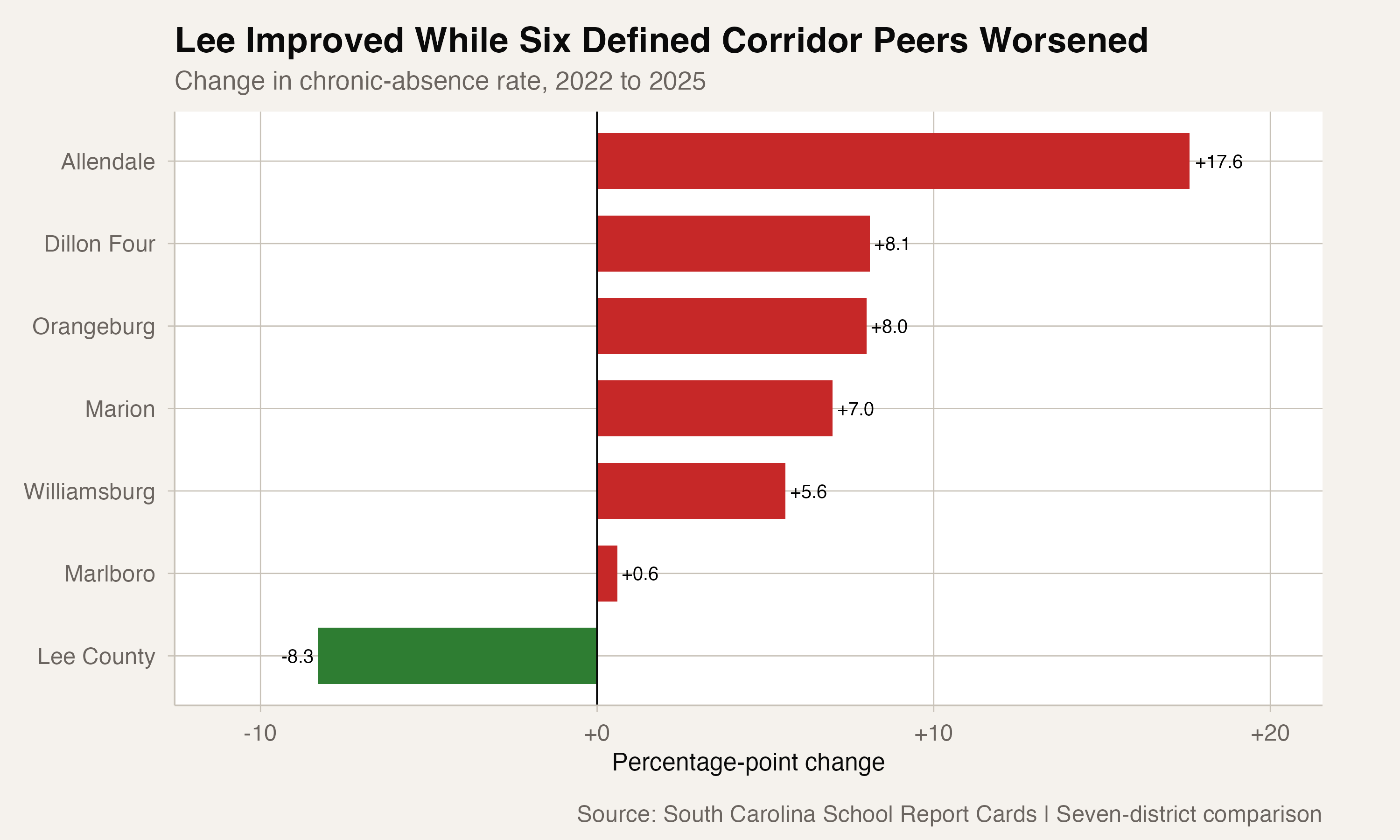
Lee County's chronic absence rate fell from 33.4% to 25.1% as six comparison districts rose; Dennis Elementary fell 44.1 points.
Palmetto State Education Coverage, Driven by Data
Education News & Data
Local education reporting from every corner of South Carolina, grounded in South Carolina Department of Education data.
Cherokee County went from 39.3% chronic absenteeism in 2022-23 to 26.2% in 2024-25, the third-largest drop among 80 South Carolina districts.
Last school year's most recent published data show 176,344 chronically absent students and a statewide rate of 22.3%, down 0.9 percentage points.
Charleston County's $25-per-week attendance pilot at 10 schools comes as its chronic absenteeism rate improved from 24.4% to 20.5%, still above the 2022 level.
Greenwood 52's published chronic-absenteeism rate fell from 14.0% to 7.8% in one year, while South Carolina's rate was 22.3%.
Lee County's chronic absence rate fell from 33.4% to 25.1% as six comparison districts rose; Dennis Elementary fell 44.1 points.
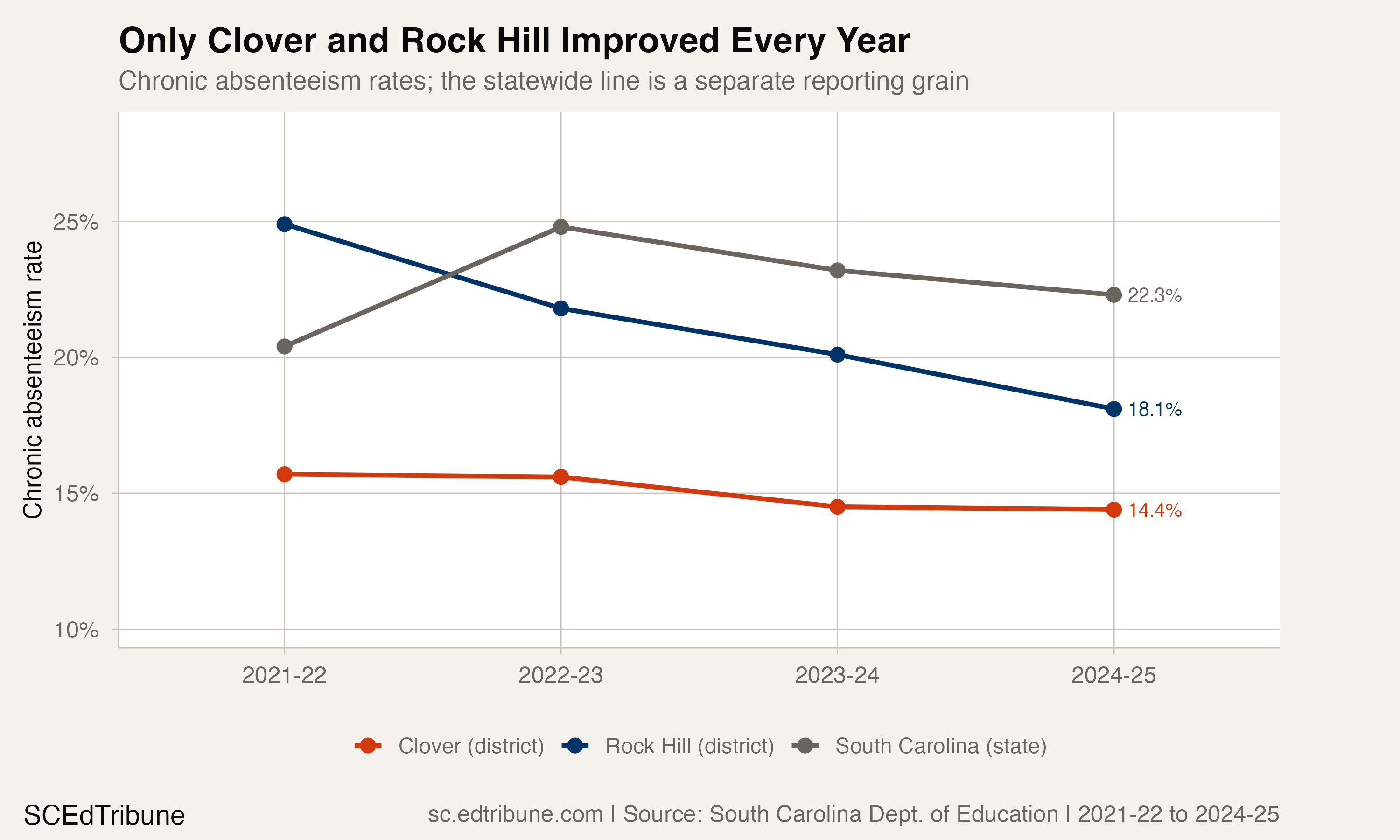
Clover and Rock Hill were the only two of 77 complete South Carolina district-level series to improve chronic absenteeism every year.
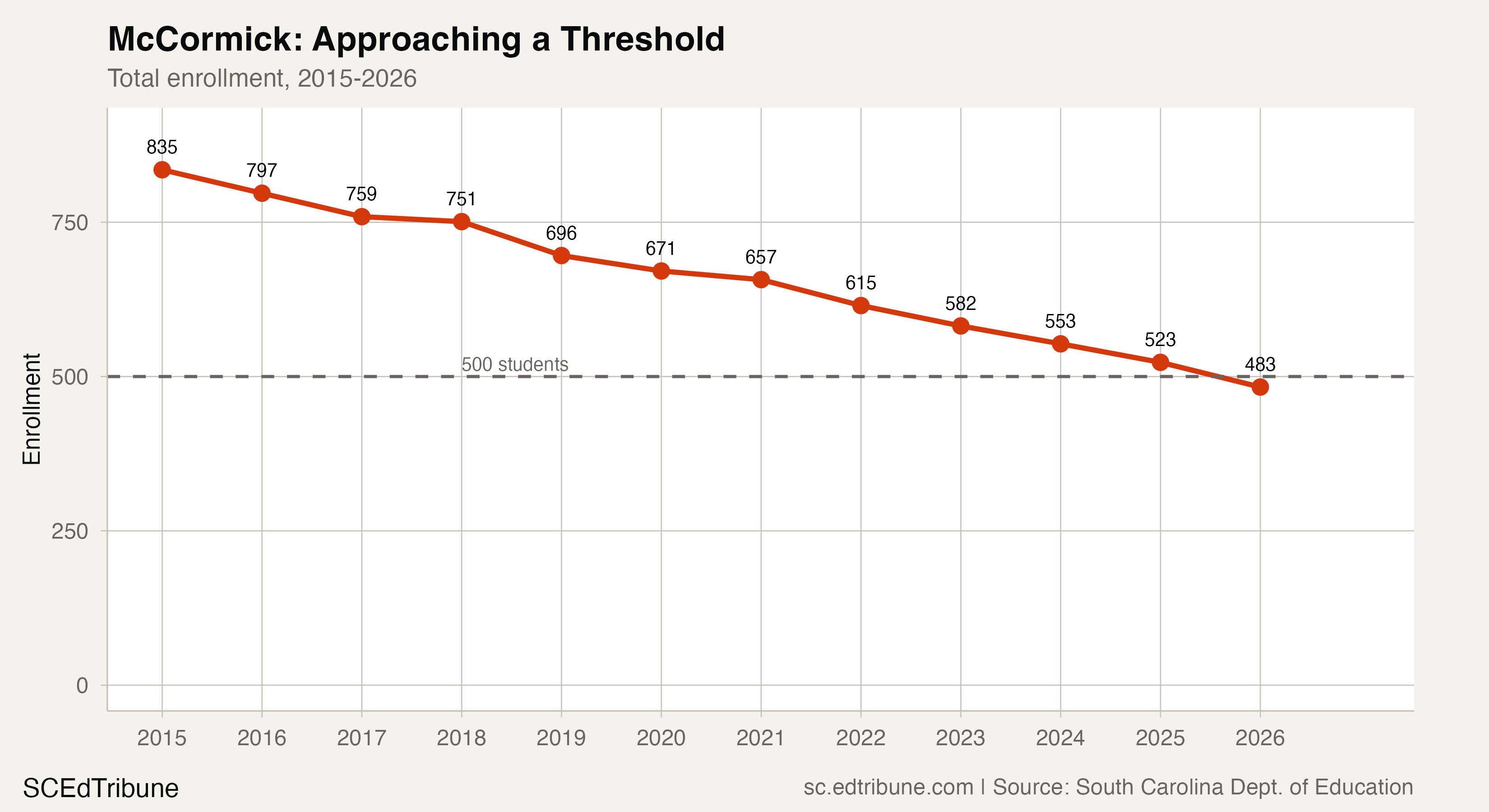
McCormick, Lee, and Williamsburg have each lost over 40% of their students since 2015. McCormick has 483 left.
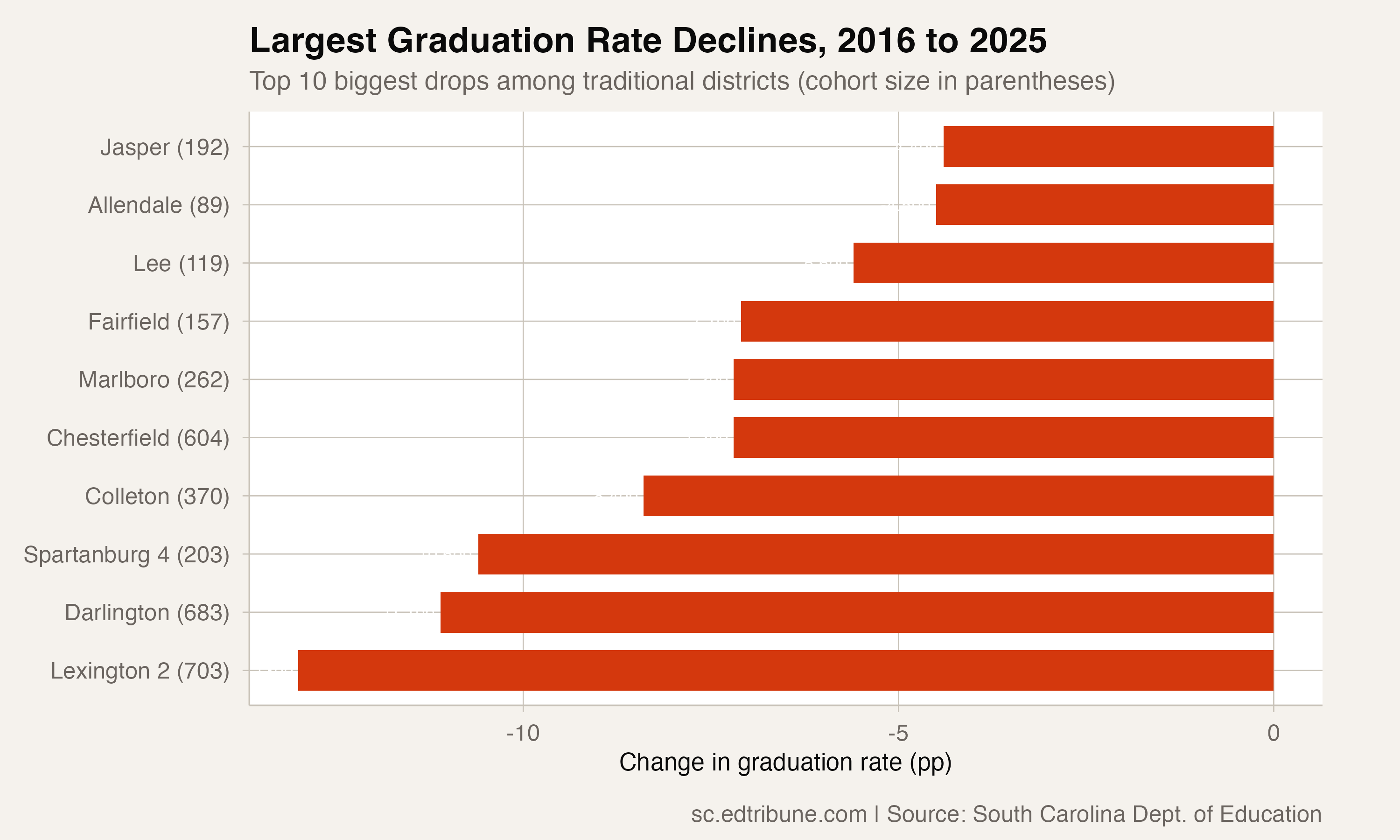
While South Carolina's graduation rate reached a ten-year high, Lexington 2 dropped 12.9 points, Darlington fell 11.0, and Spartanburg 4 declined 10.6, the three largest district declines in the available series.
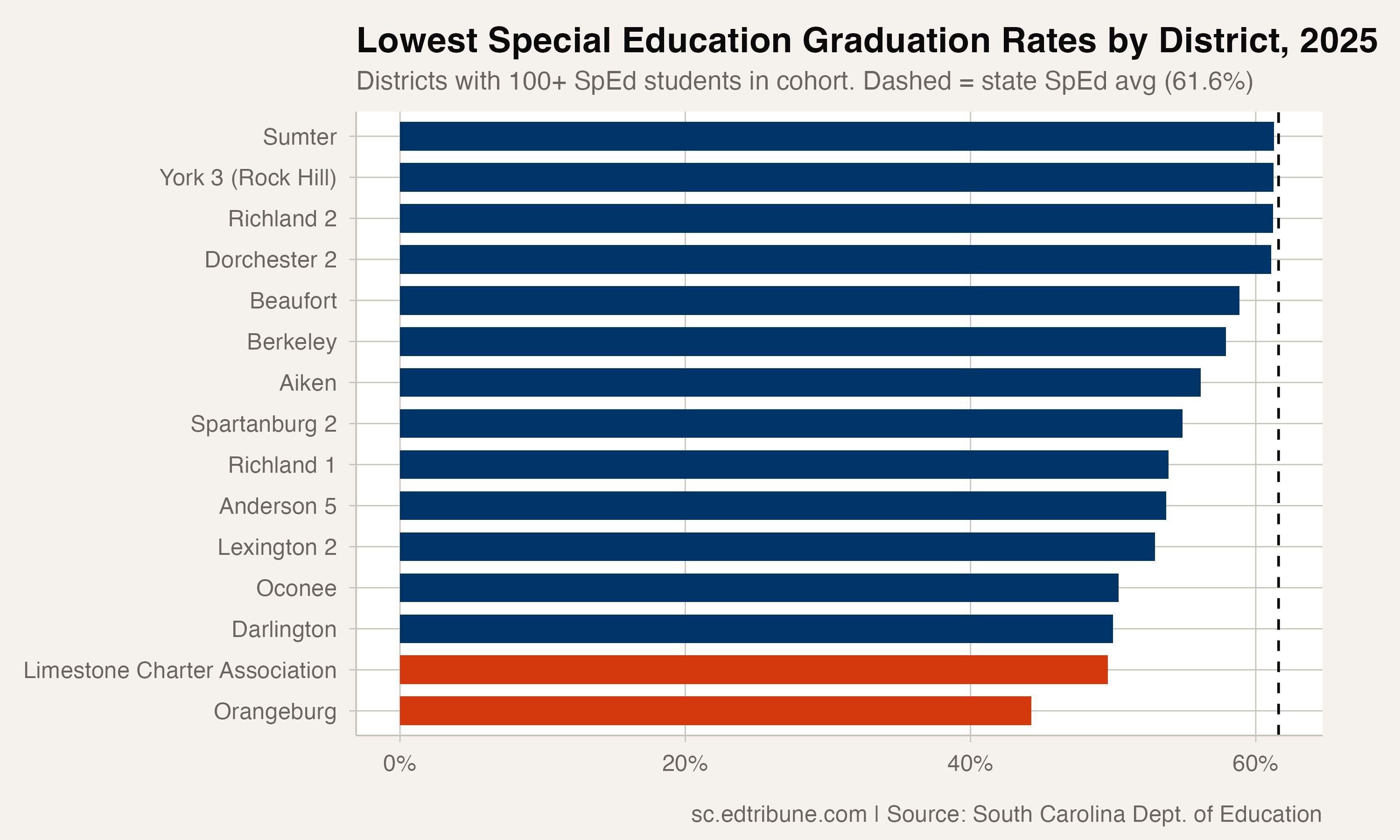
South Carolina's special-education graduation rate rose from 52.1% to 61.6% while its gap from the all-student rate narrowed from 30.5 to 25.1 points.
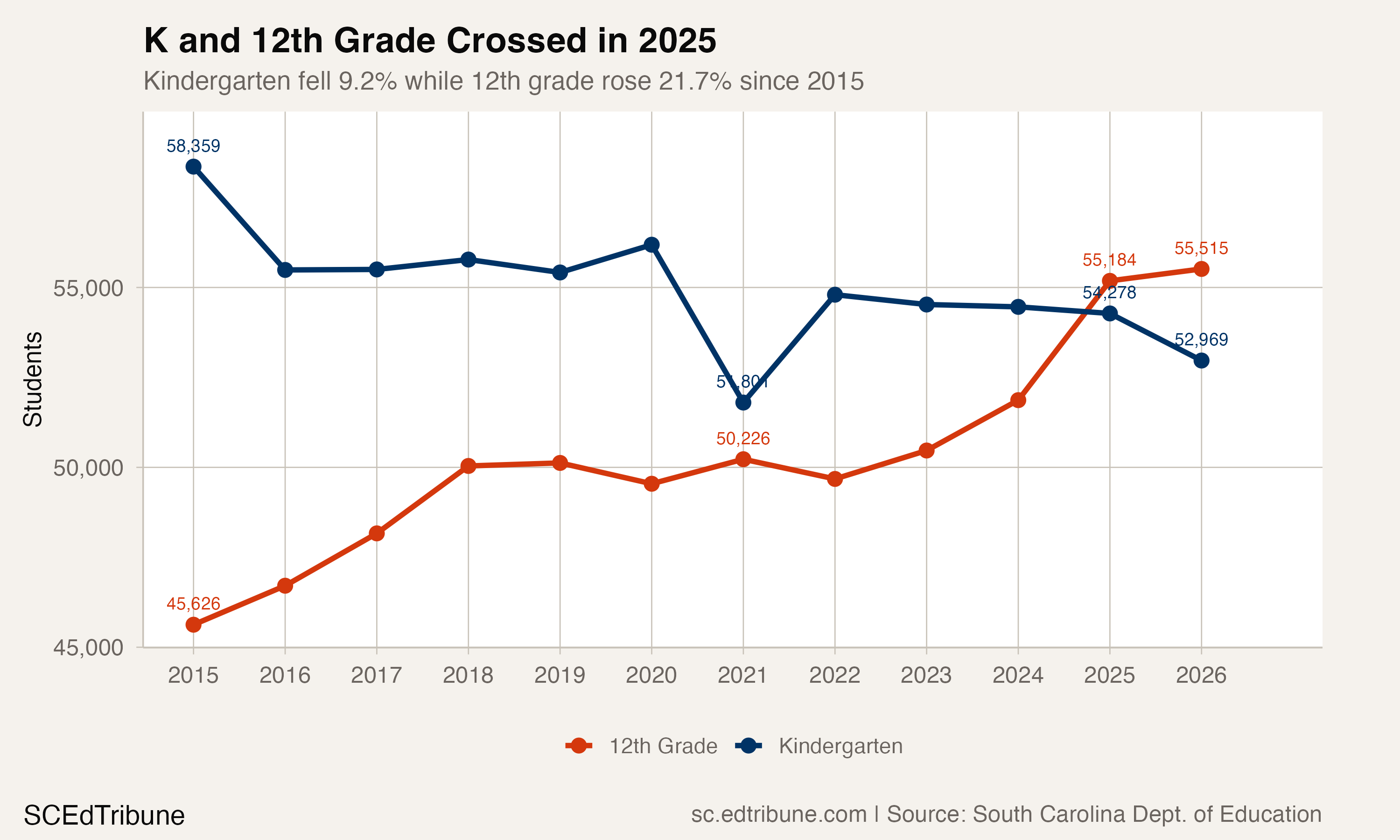
State enrollment rows show kindergarten fell below 12th grade in 2024-25 and the gap widened to 2,546 students in 2025-26.
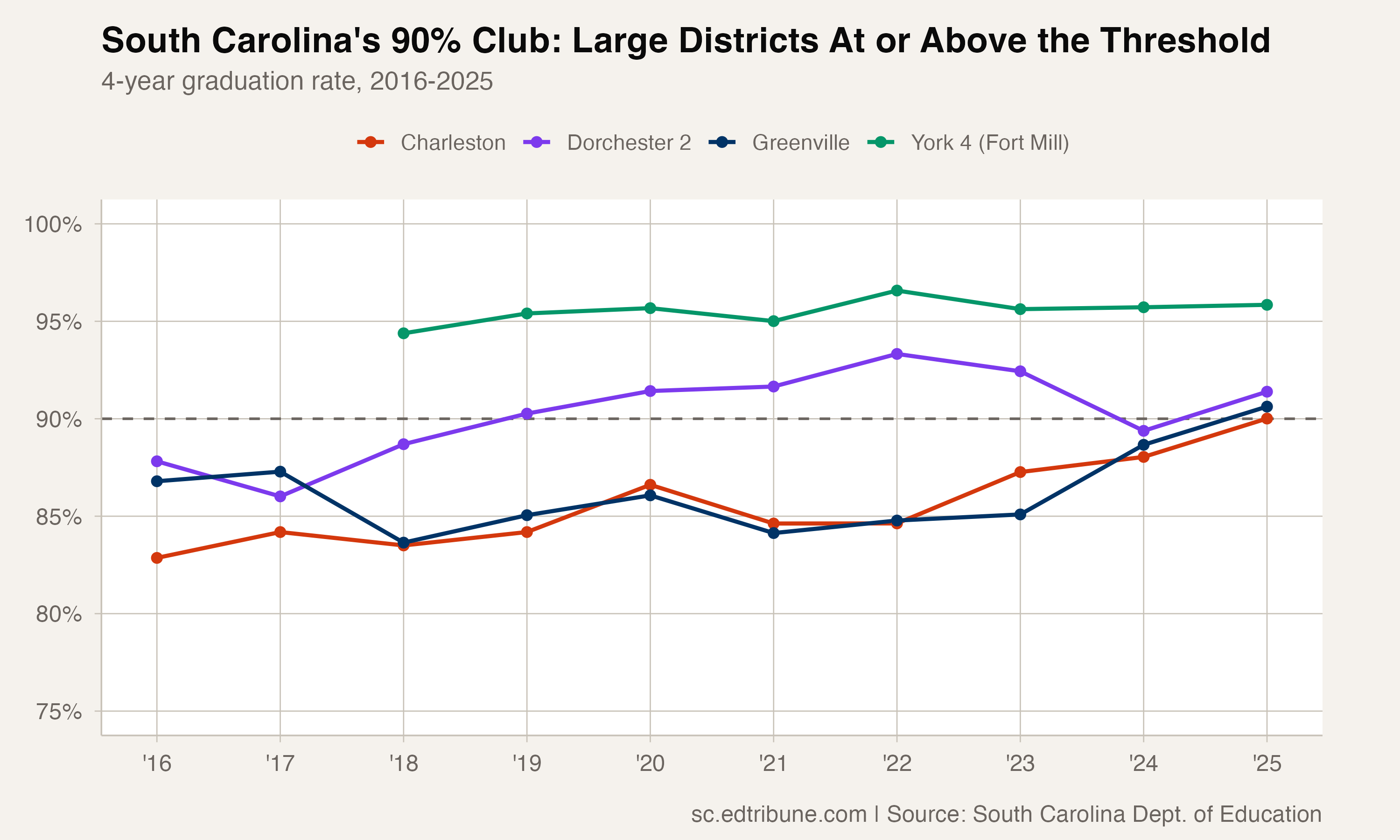
Charleston County School District posted a 90.0% graduation rate in 2025, reaching South Carolina's 90% threshold after a nine-year climb.
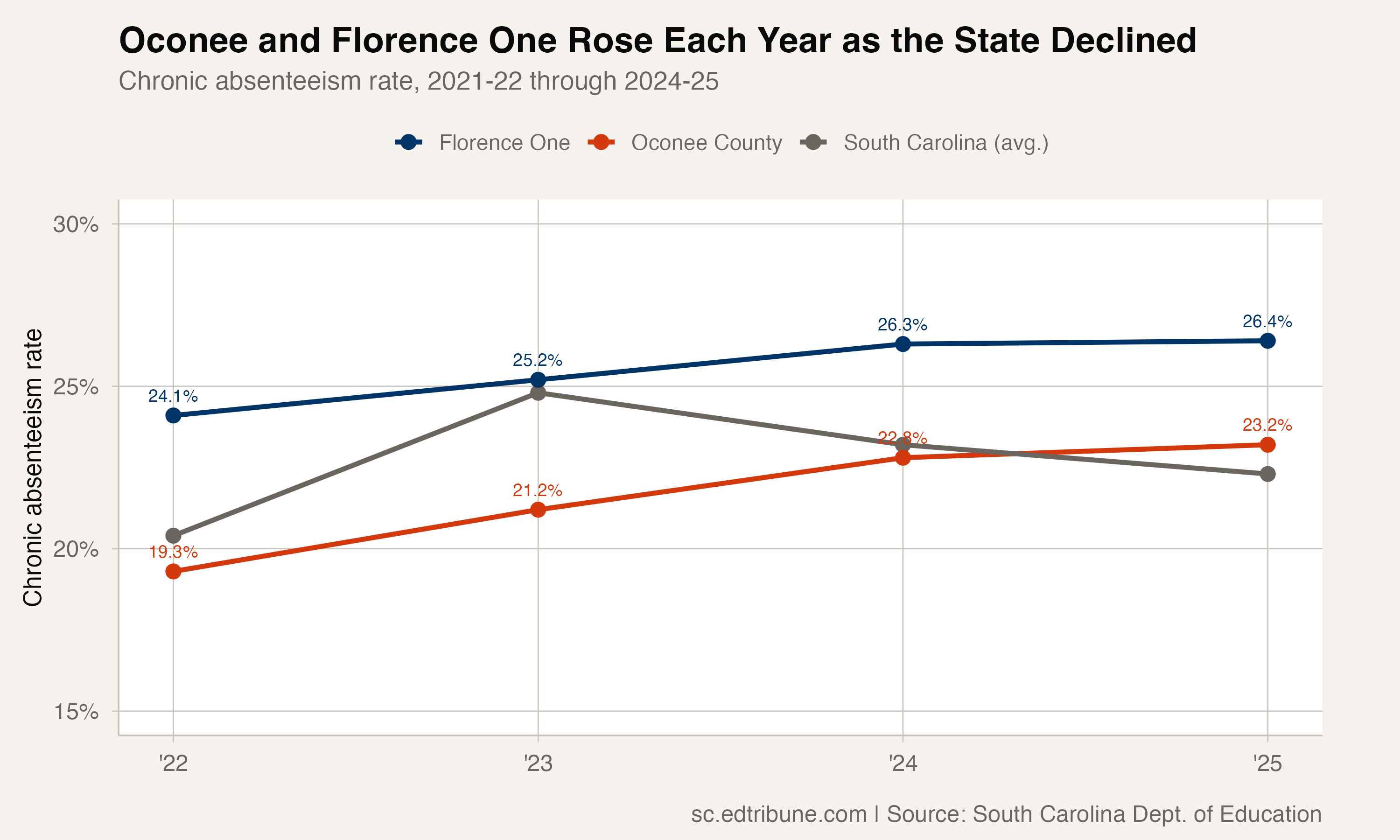
Oconee County has worsened every year in SC's chronic absenteeism data, rising from 19.3% to 23.2% while the state recovered from its peak.
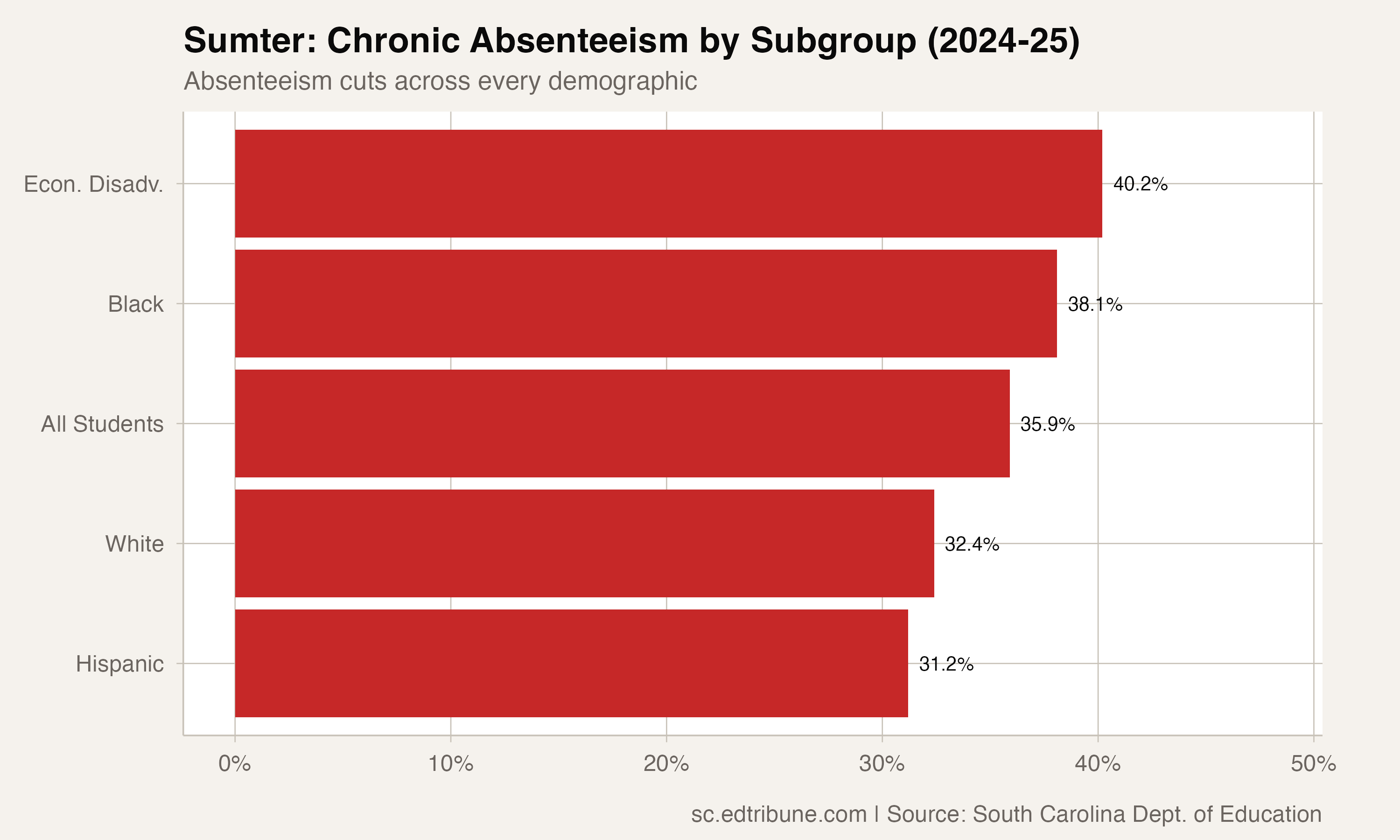
Sumter has the worst chronic absenteeism of any large SC district at 35.9%, with rates above 30% for every racial group and nearly every subpopulation.
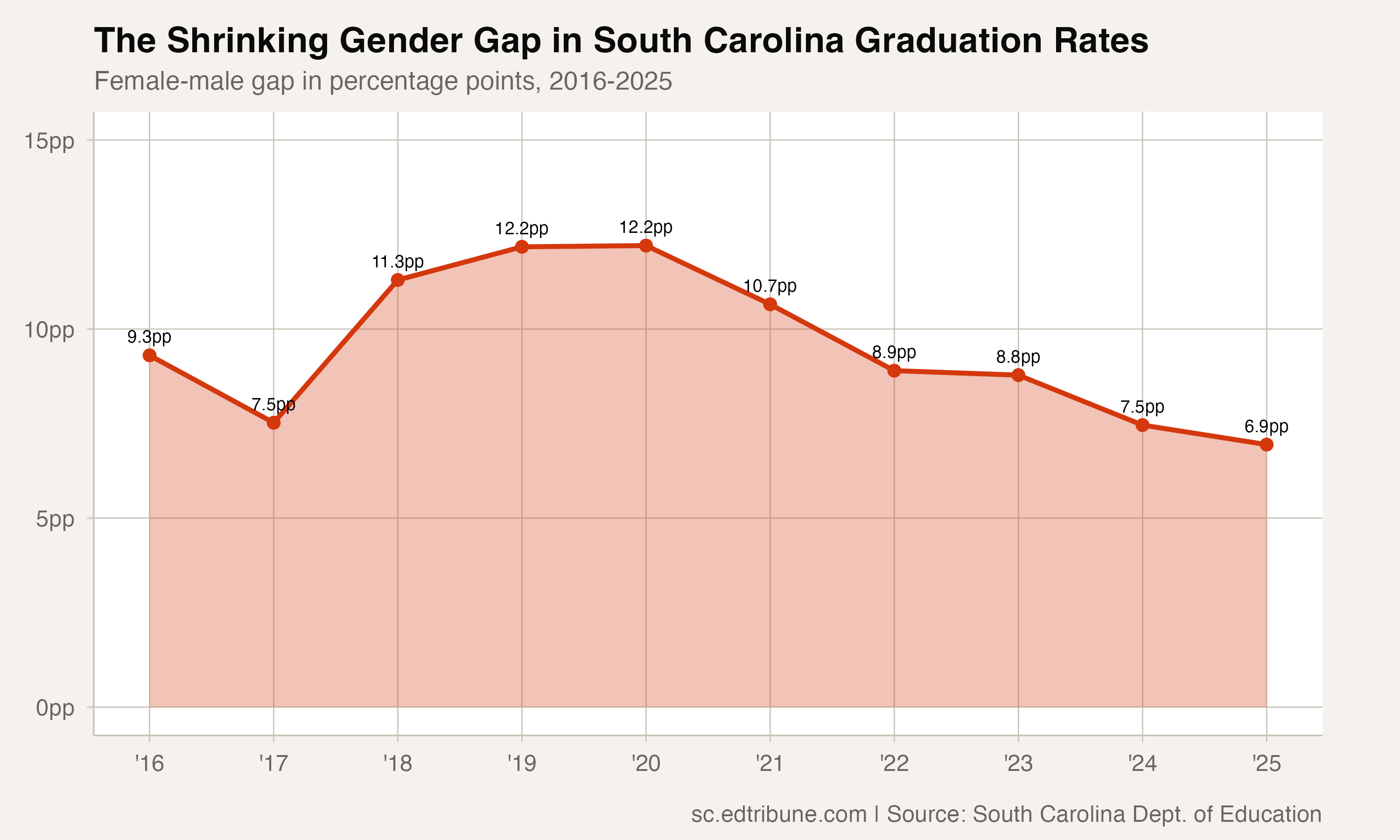
Male students in SC graduate at 83.3% vs. 90.2% for female students, a 6.9-point gap that peaked at 12.2 points in 2019 and 2020.
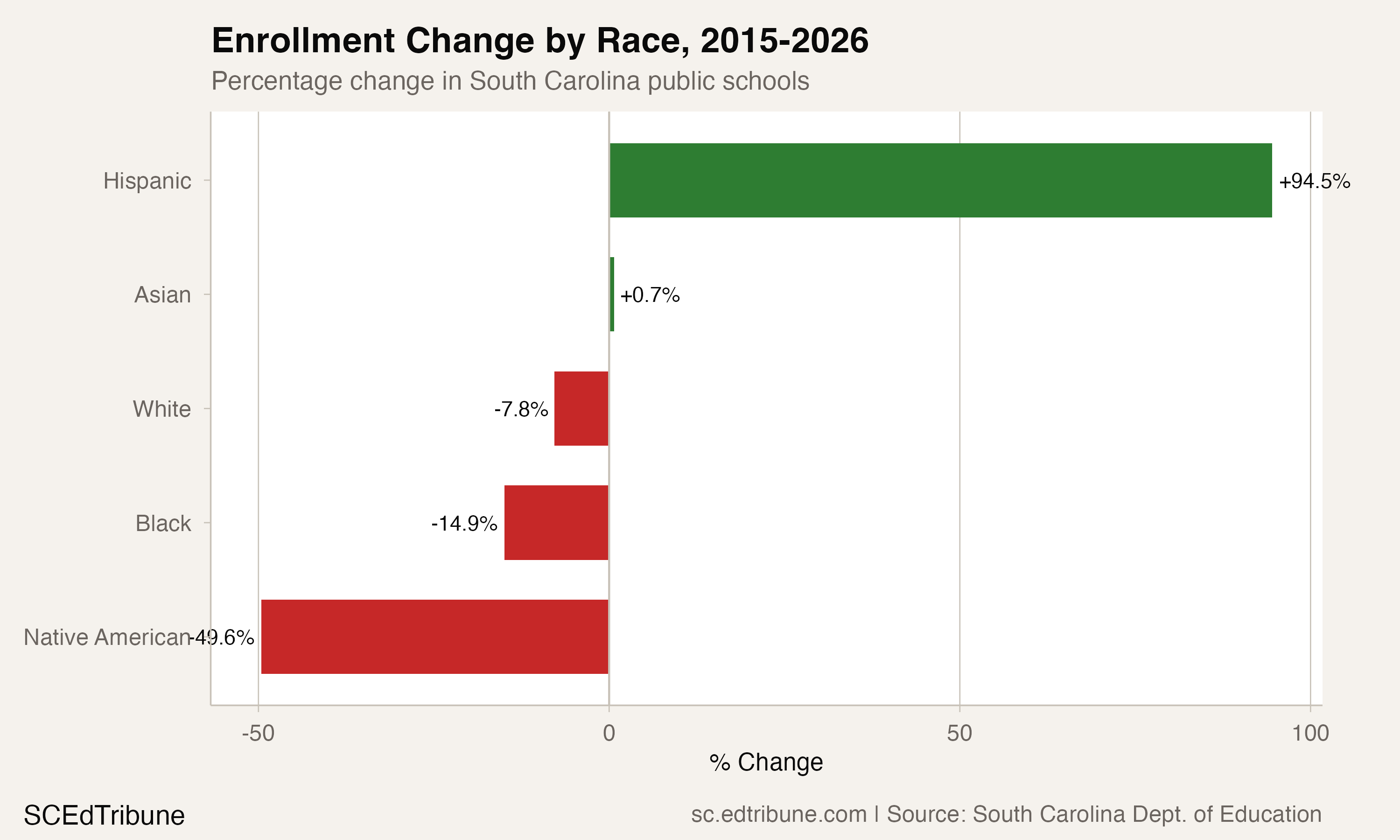
Native American enrollment fell 49.6% since 2015, but most of the drop is a reporting artifact. A 2017 reclassification into multiracial moved 2,065 students into a new category in one year.