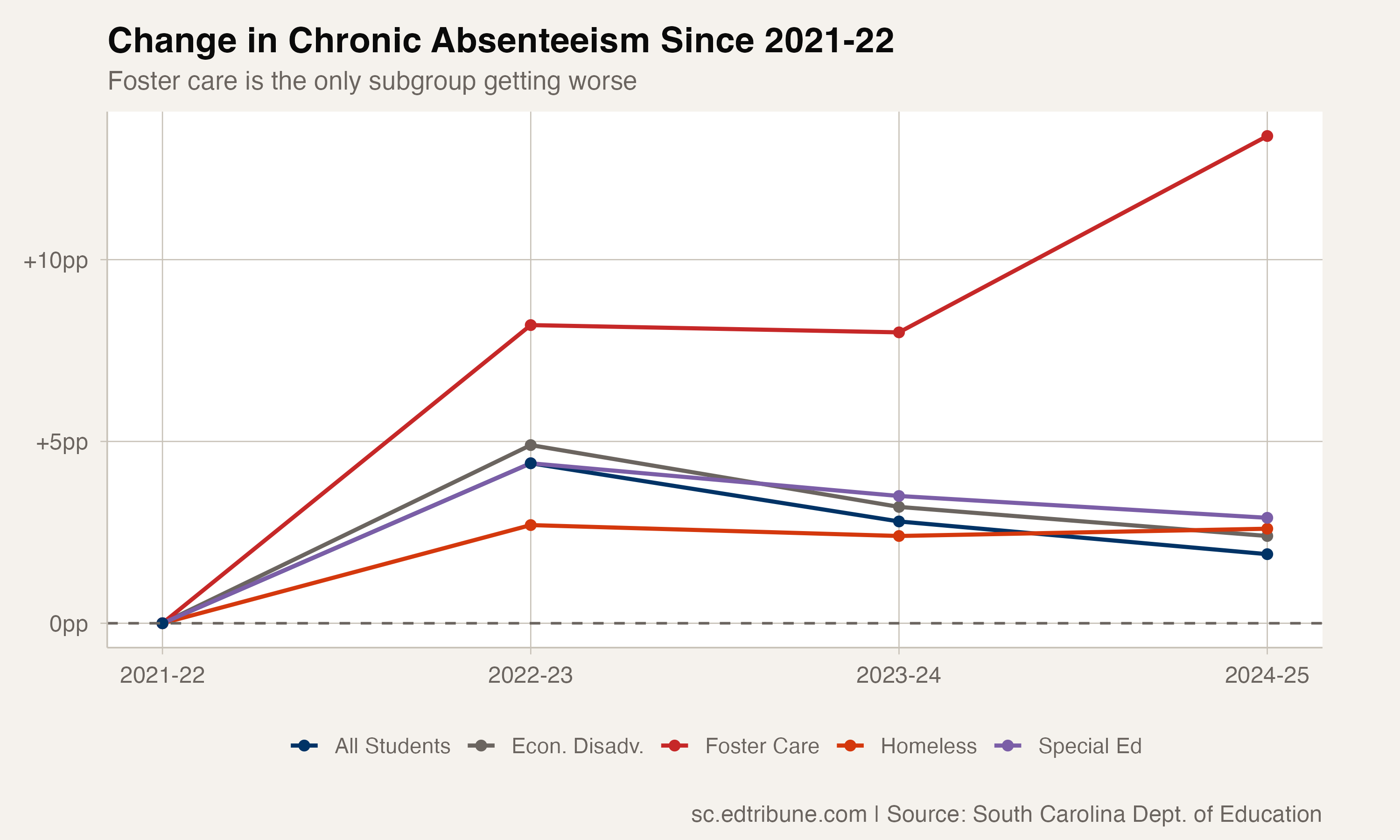
Attendance for SC Students in Foster Care Is Getting Worse, Not Better
Students in foster care in SC have a 42.4% chronic absenteeism rate, up 13.4 points in four years, even as the foster care population dropped by nearly half.
Palmetto State Education Coverage, Driven by Data
Page 2 of 3
Students in foster care in SC have a 42.4% chronic absenteeism rate, up 13.4 points in four years, even as the foster care population dropped by nearly half.
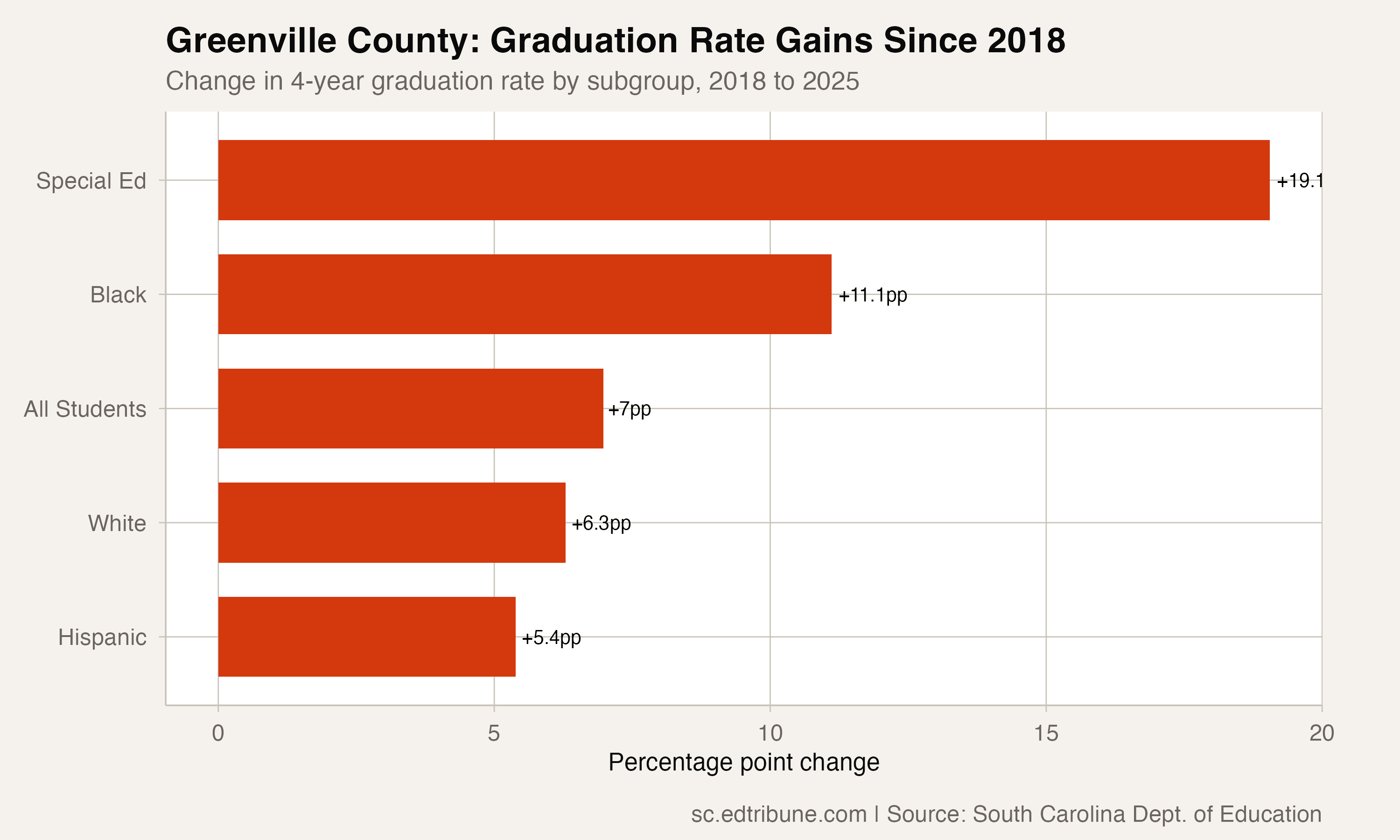
Greenville County Schools posted a 90.6% graduation rate in 2025, the first time the state's largest district has crossed 90%, with broad gains across every subgroup.
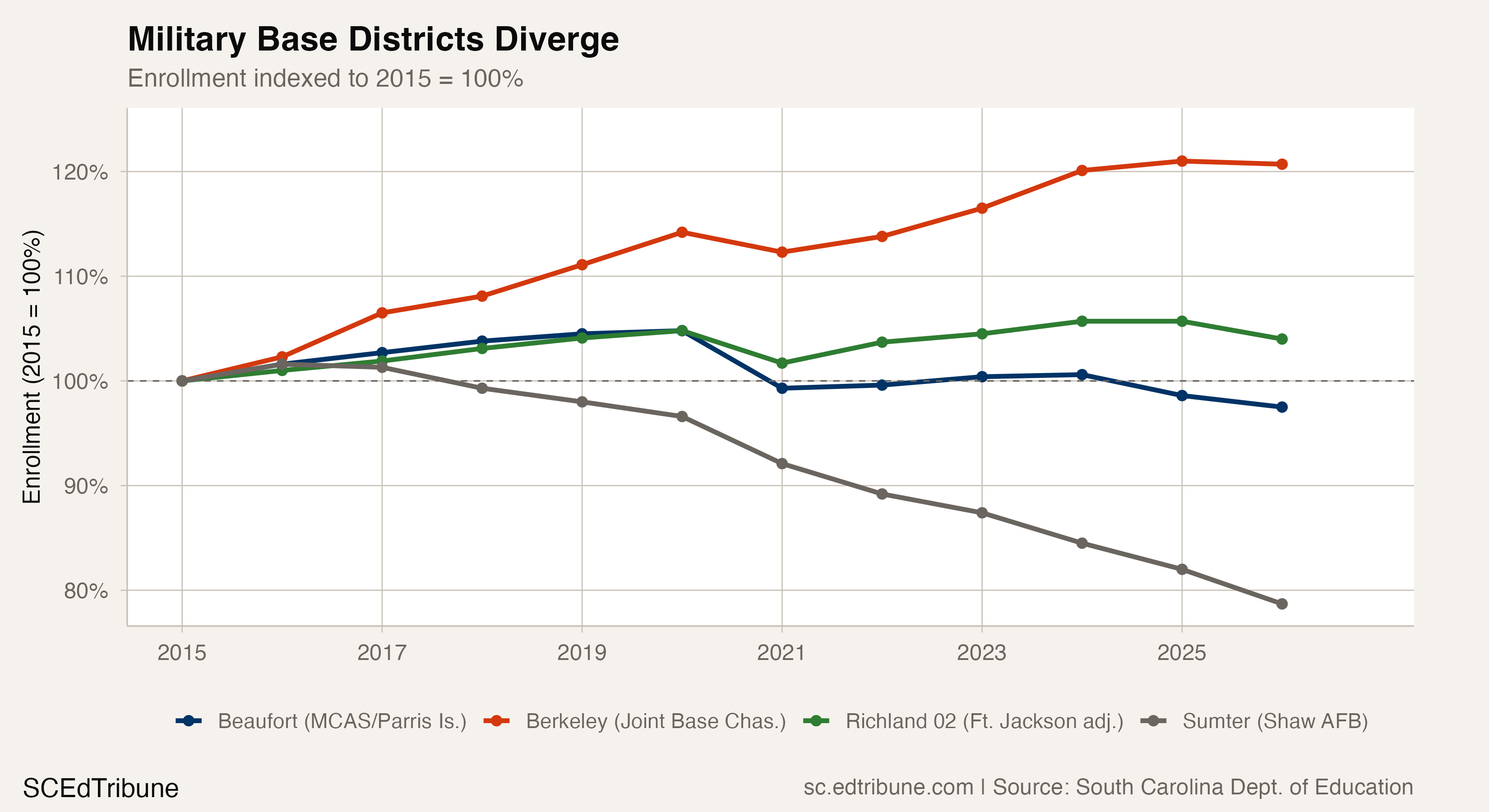
Sumter has lost 3,610 students since 2015, a 21.3% decline, despite hosting one of the Southeast's largest military installations. The base's $2 billion impact isn't enough.
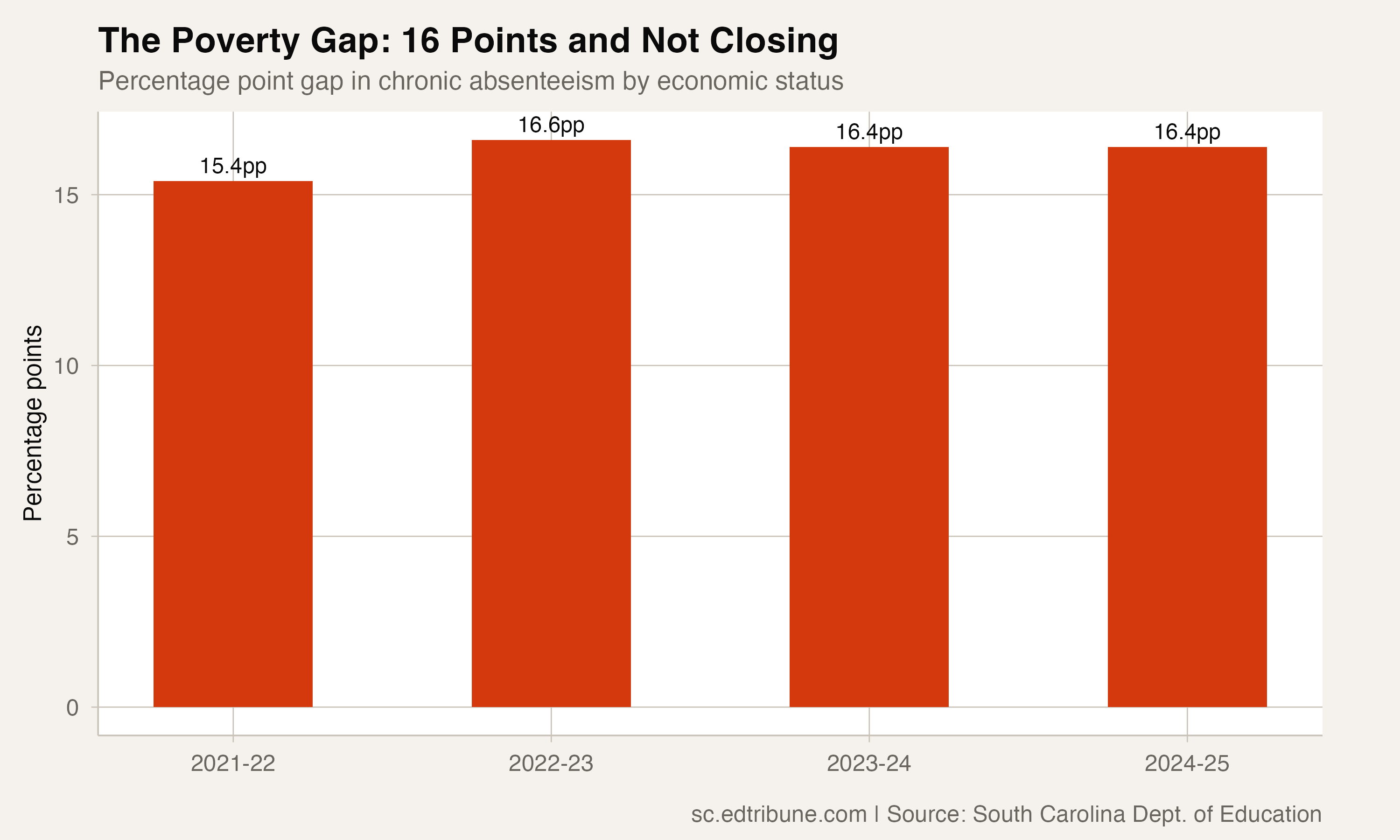
Economically disadvantaged students are chronically absent at 28.5% vs 12.1% for their peers, a 16-point gap that has not budged in four years of data.
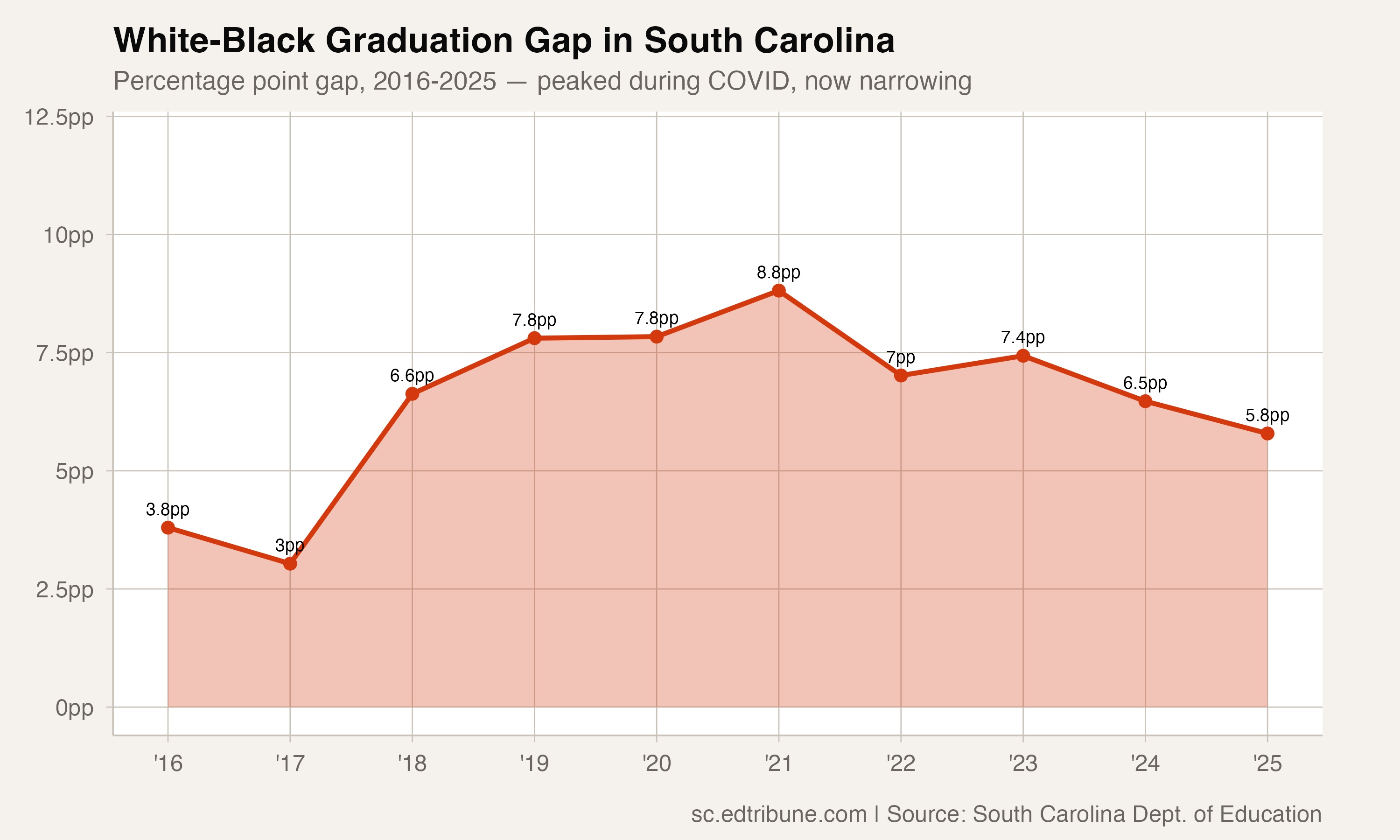
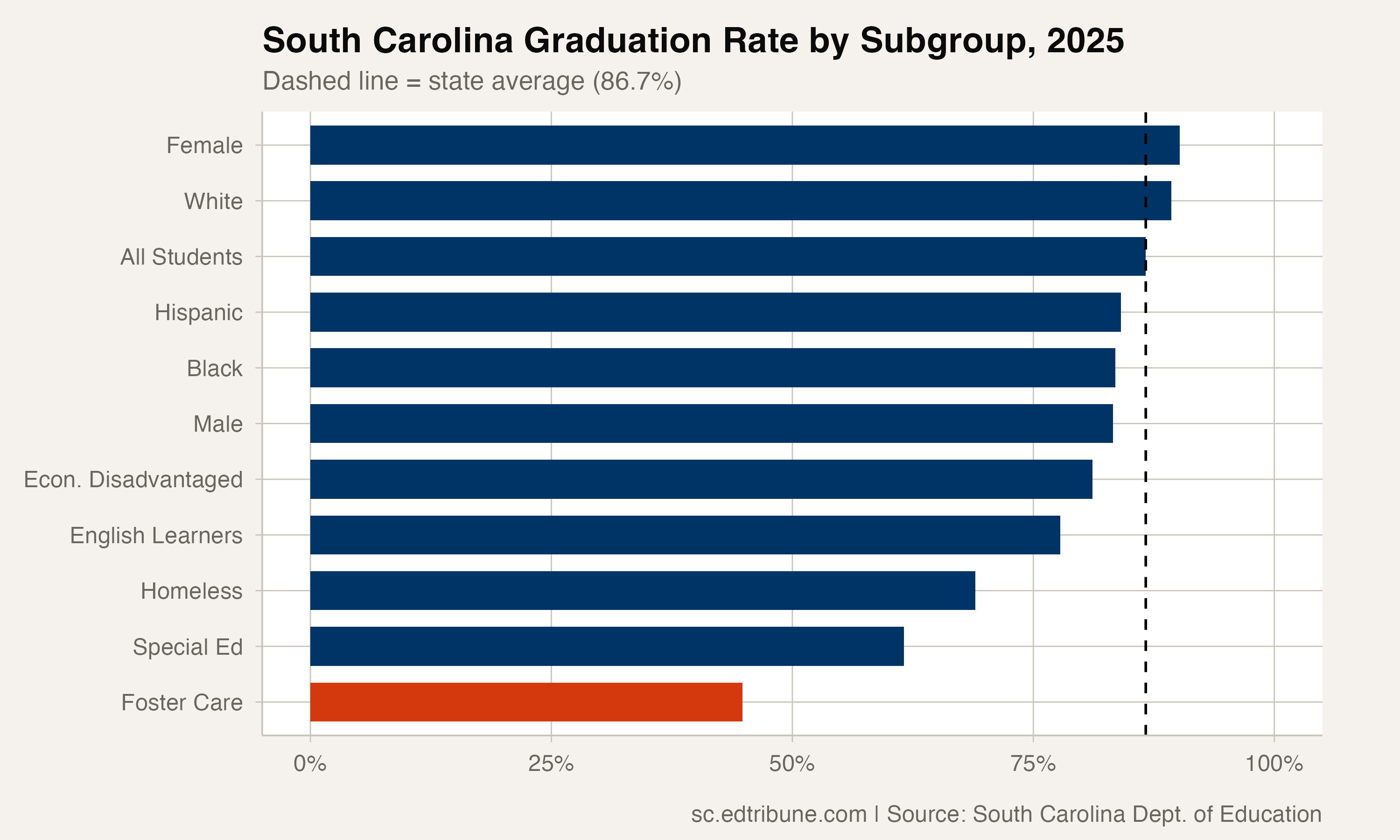
South Carolina's graduation rate reached an all-time high of 86.7% in 2025, but youth in foster care graduate at just 44.8%, a 41.9 percentage-point gap.
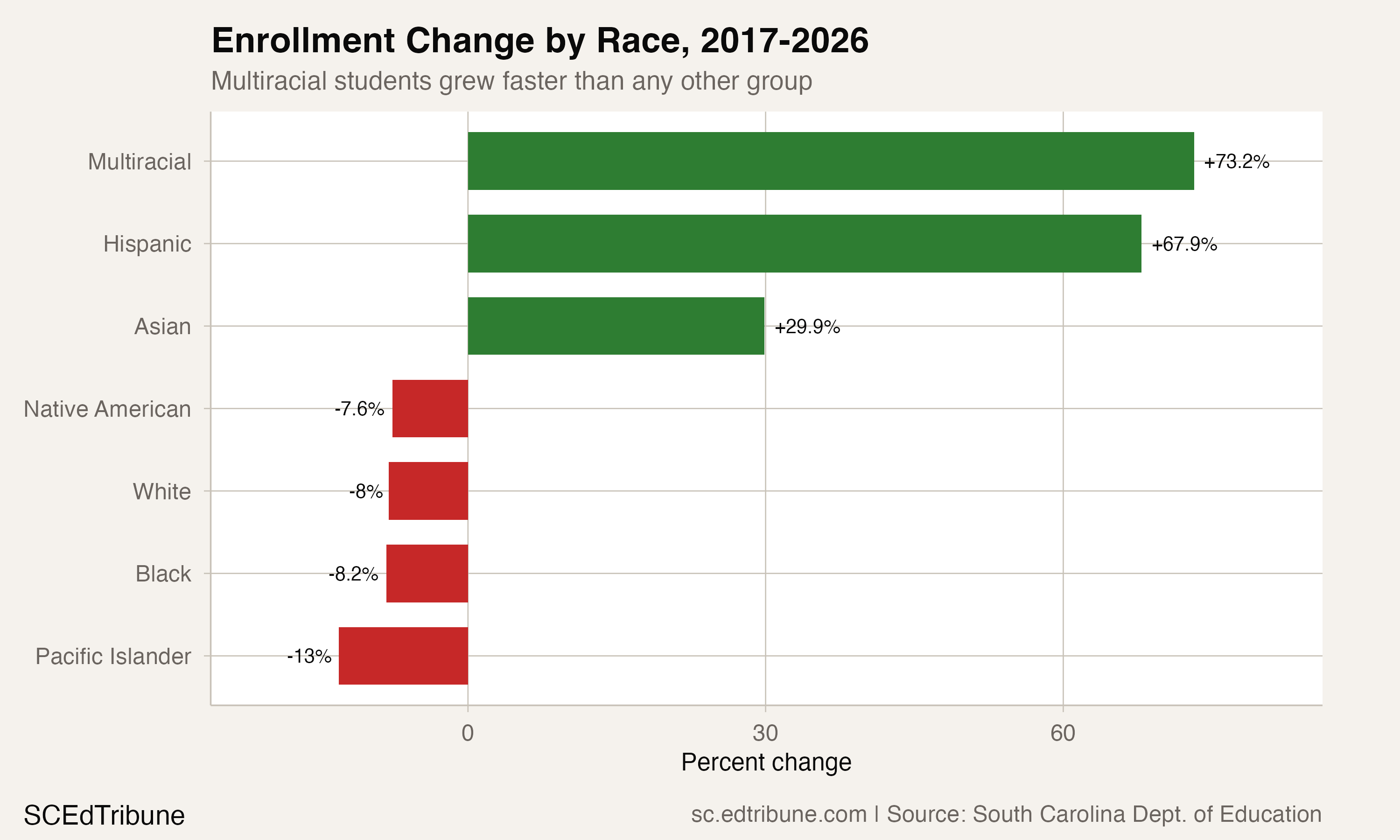
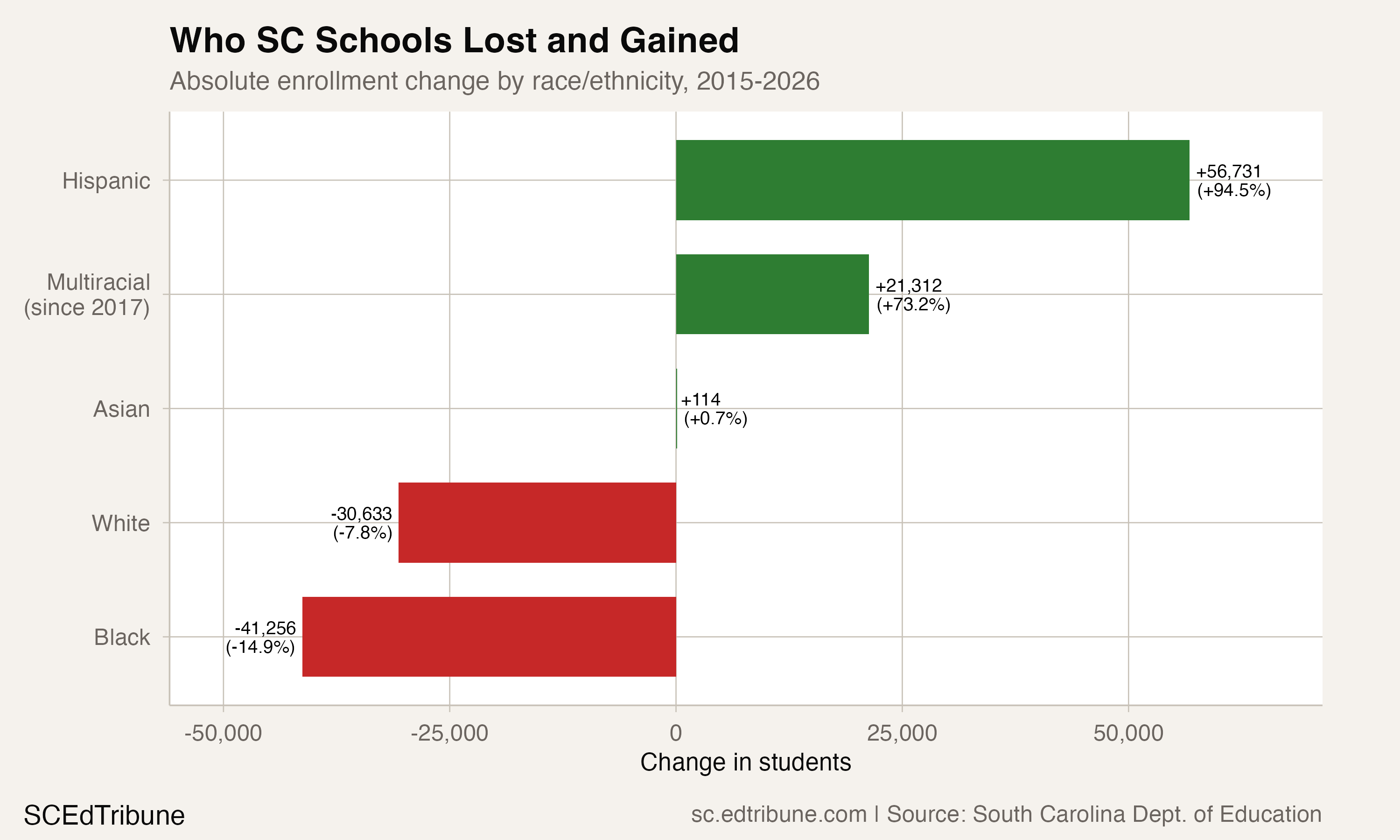
South Carolina lost 41,256 Black students since 2015, outpacing white decline and reshaping the state's school demographics as Hispanic enrollment nearly doubled.
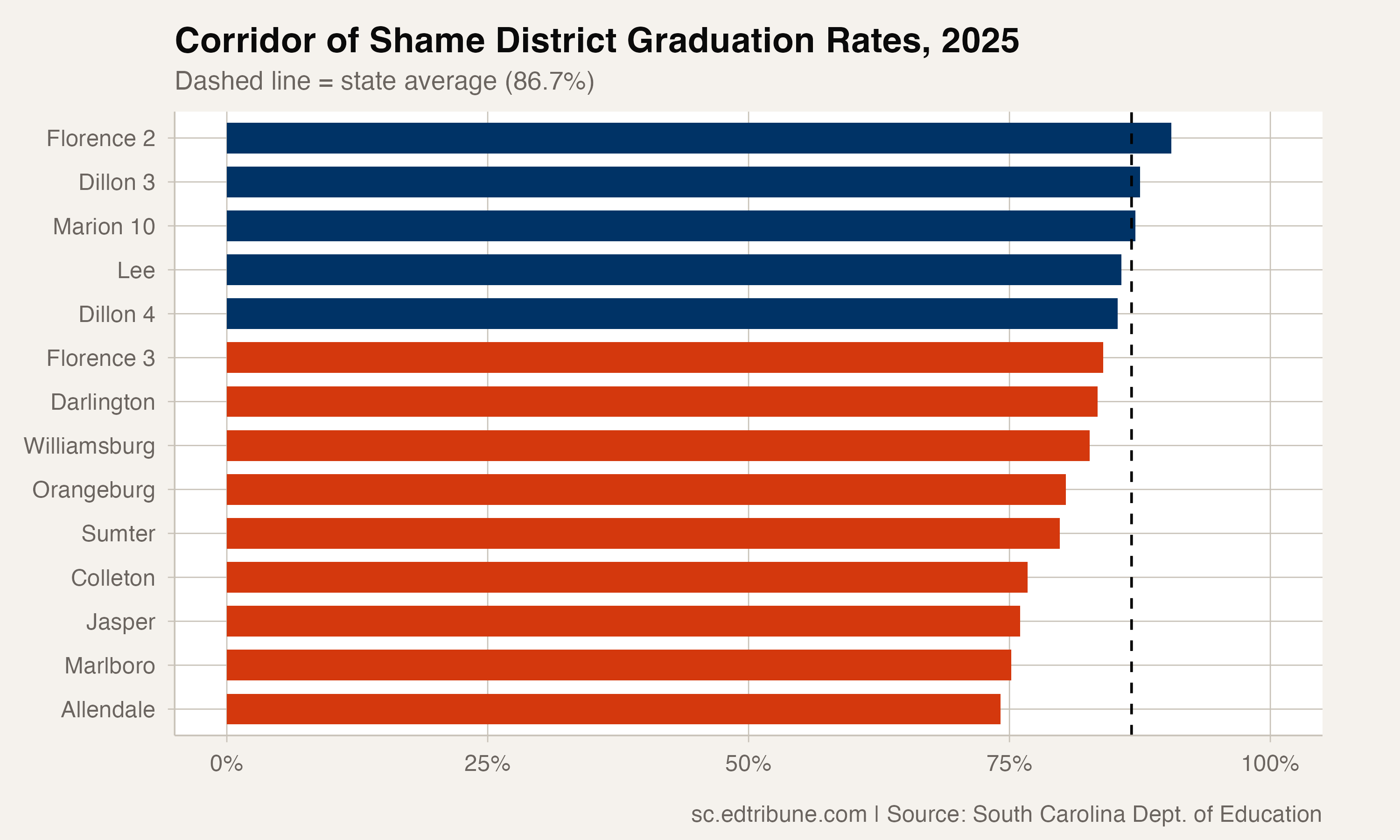
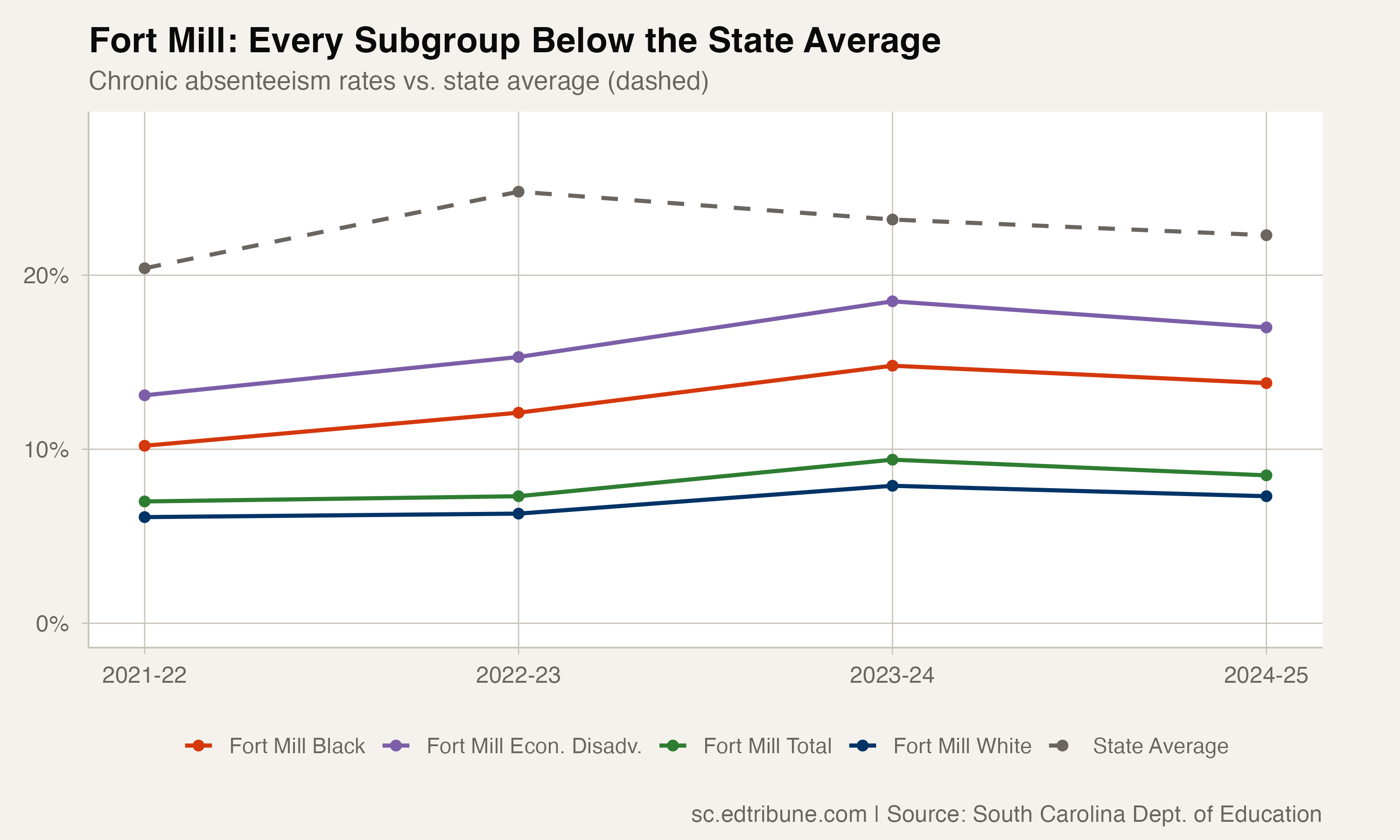
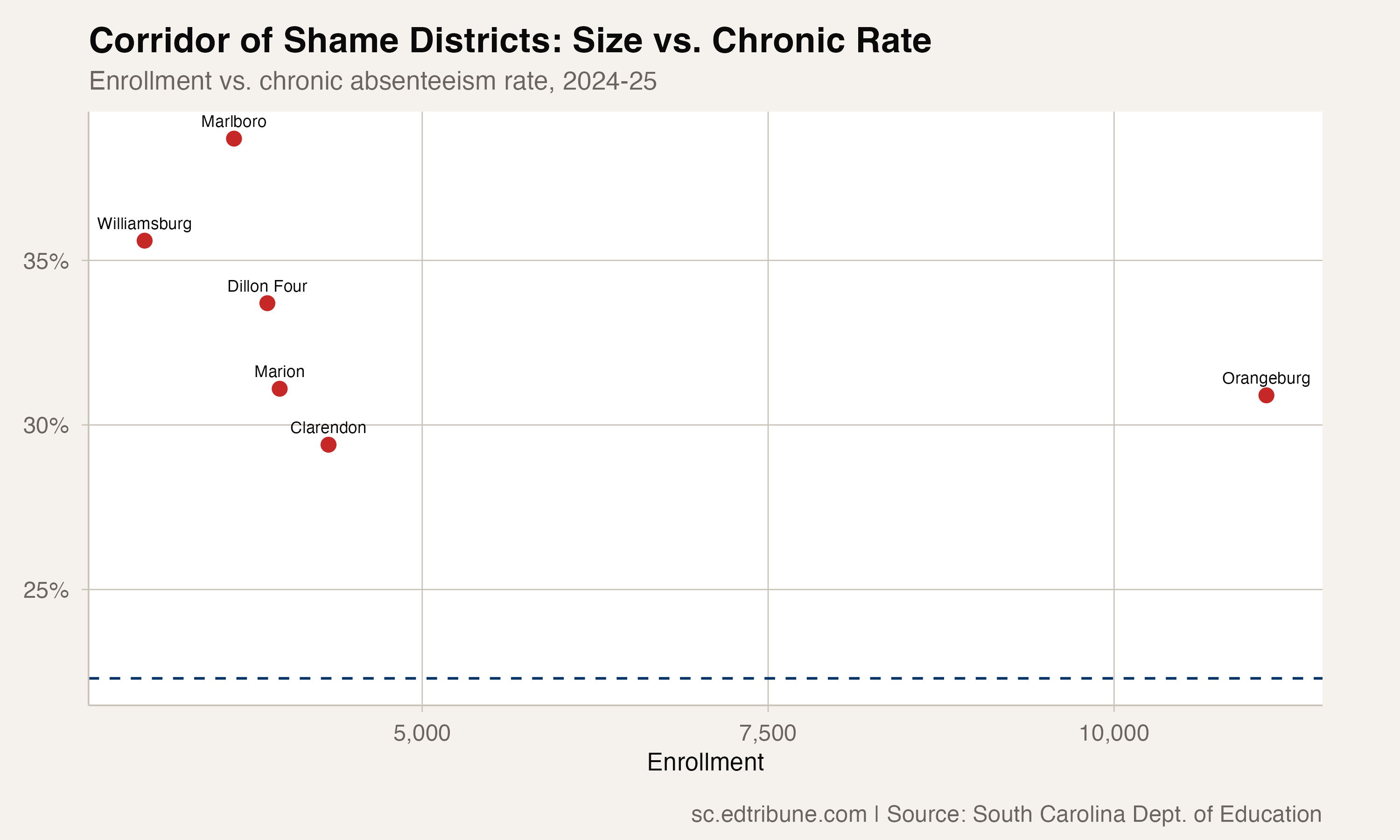
South Carolina's poorest rural districts along I-95 have chronic absenteeism rates nearly double the state average, deepening decades of educational inequality.
SC produced 54,980 graduates in the class of 2025 (a record) as the graduation rate reached an all-time high of 86.7% from a record cohort of 63,440.
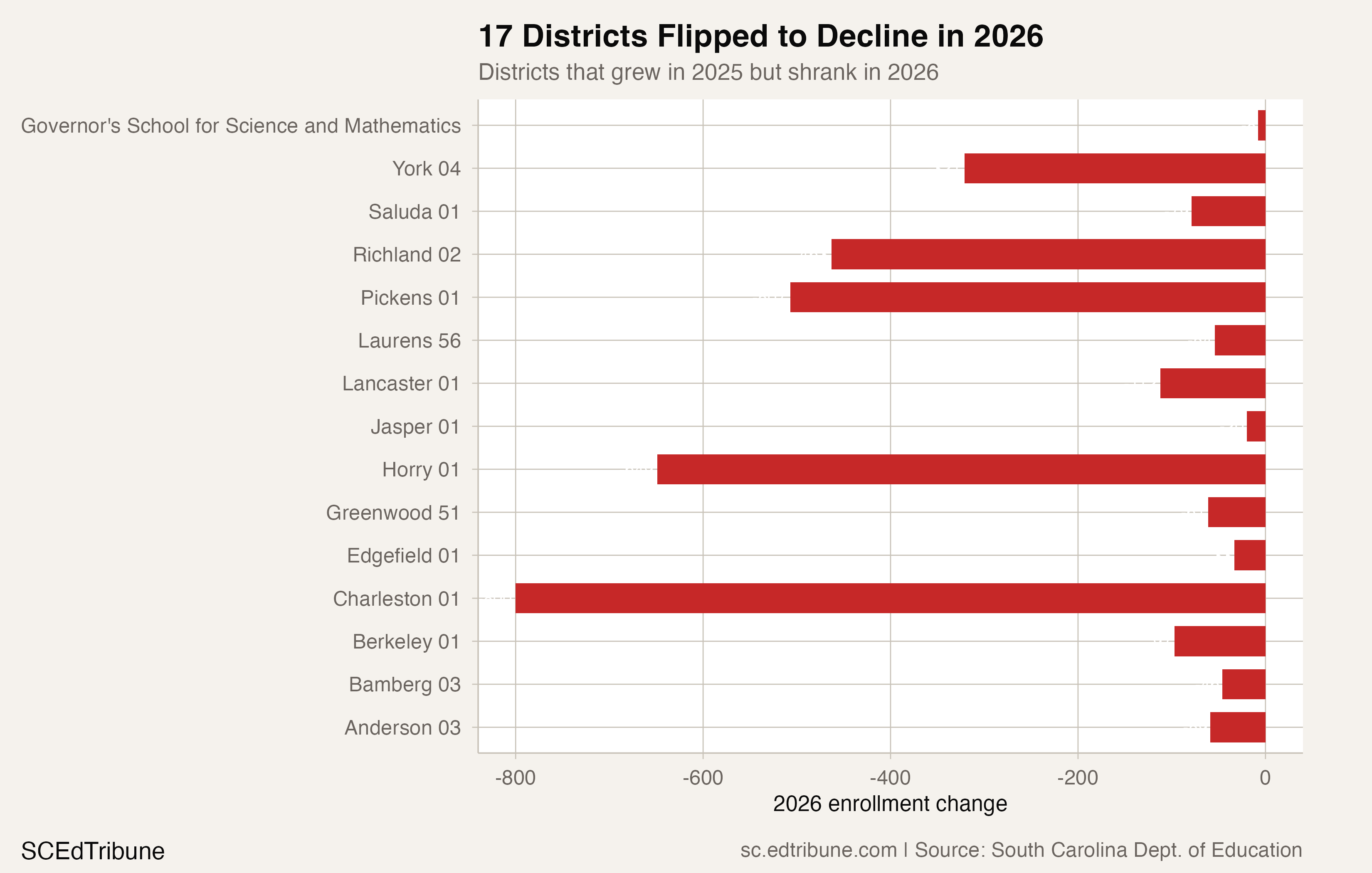
34 of South Carolina's 81 school districts recorded their lowest enrollment in 12 years in 2025-26, while 59 declined and only 5 reached highs.
Students who are currently homeless in SC have a 48.7% chronic absenteeism rate that has barely budged in four years, while students in foster care are getting worse.
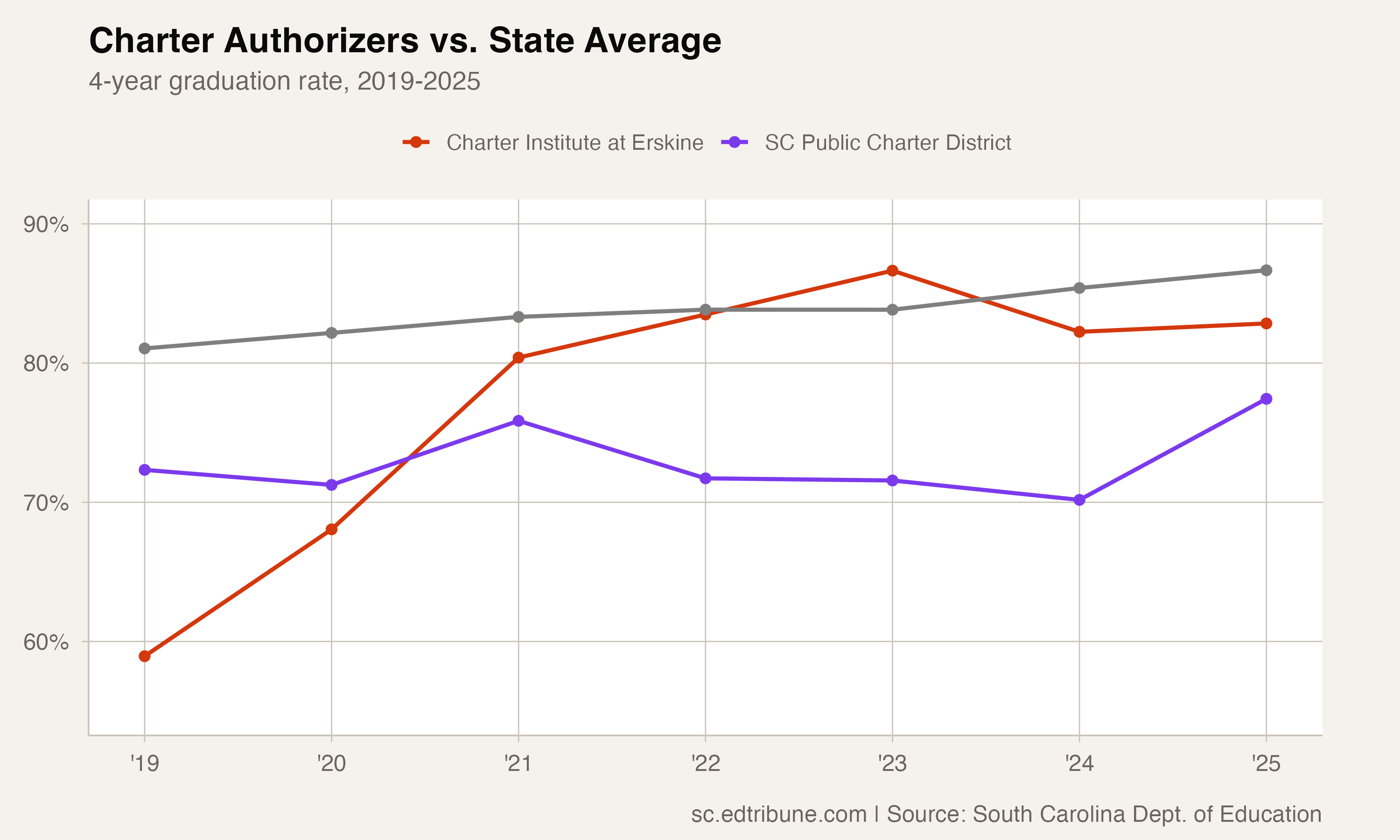
The Charter Institute at Erskine grew from 8,450 to 28,376 students in seven years, becoming SC's sixth-largest district.
SC's recovery from its chronic absenteeism peak is decelerating. The state's Be Present S.C. campaign and Charleston's $25/week incentive pilot represent divergent bets on what works.
Abbeville County is 72% economically disadvantaged, yet its 16.3% chronic rate beats Dorchester Two, Richland Two, and most affluent SC districts.
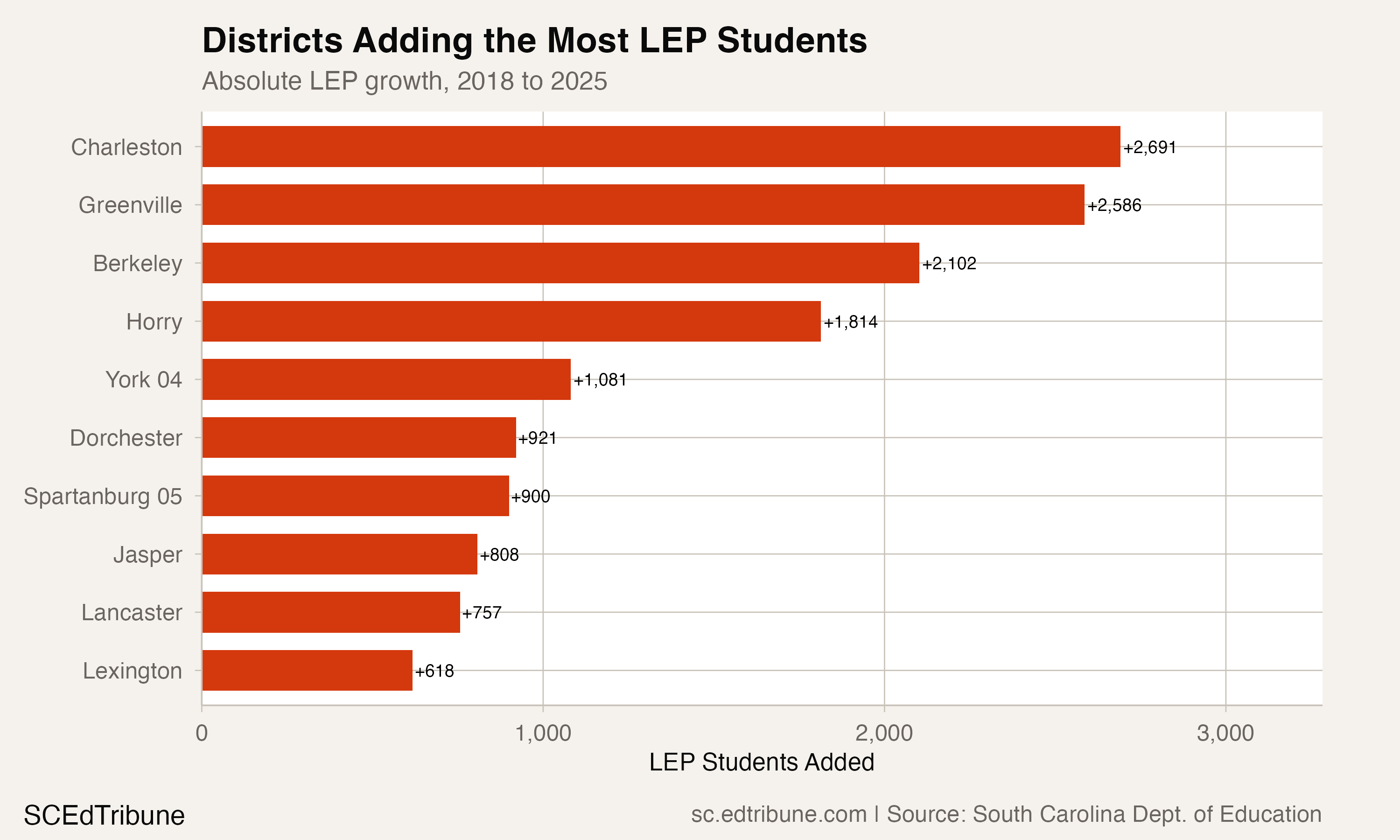
Hispanic enrollment in SC nearly doubled in 11 years, from 60,023 to 116,754. Without that growth, the state would have lost students.
Colleton, Darlington, Fairfield, McCormick, Marion, and Williamsburg have lost a combined 8,634 students since 2015. All six are at all-time lows.