Graduation Rate
South Carolina Produces Record 54,980 Graduates as Rate Hits All-Time High
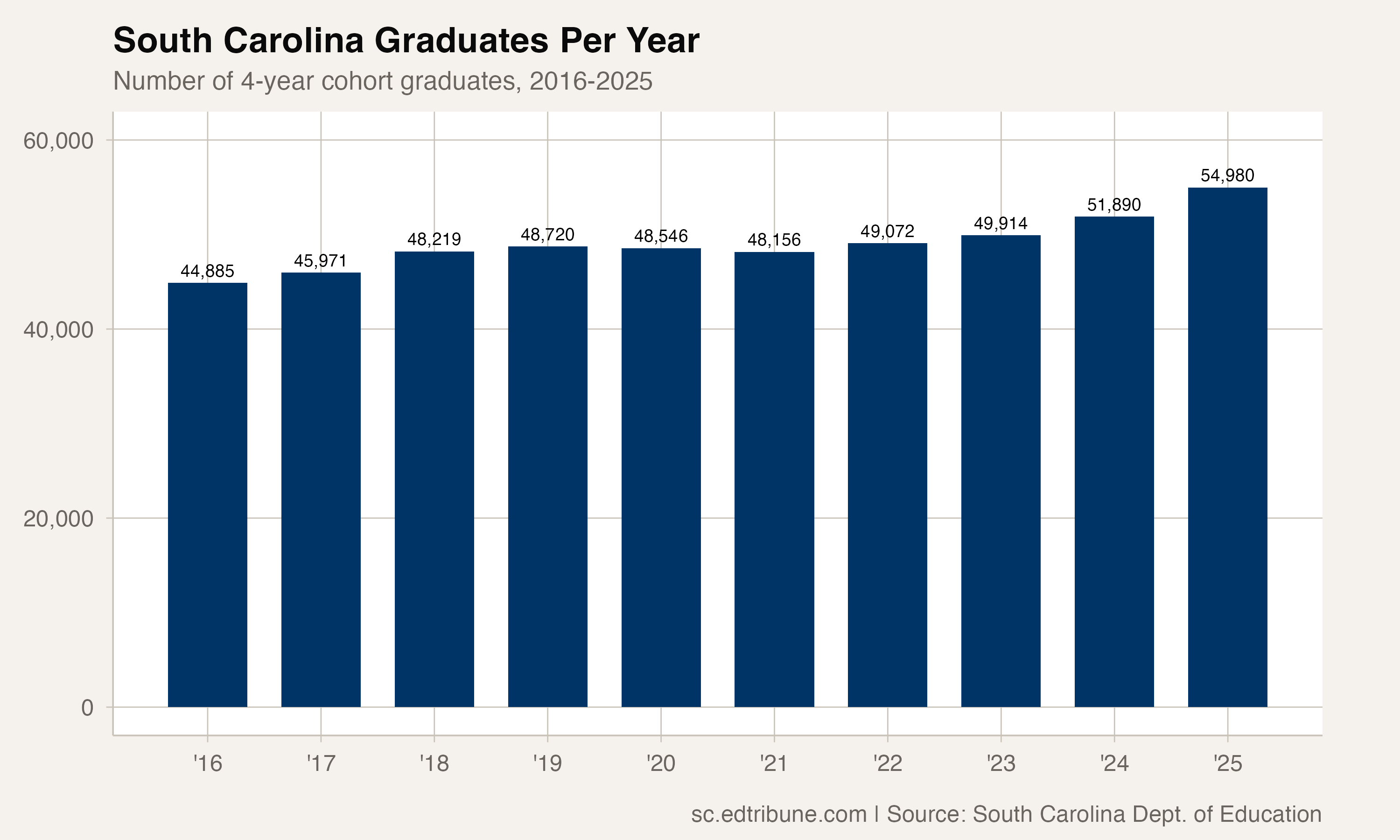
SC produced 54,980 graduates in the class of 2025 (a record) as the graduation rate reached an all-time high of 86.7% from a record cohort of 63,440.
Palmetto State Education Coverage, Driven by Data
Page 3 of 3
SC produced 54,980 graduates in the class of 2025 (a record) as the graduation rate reached an all-time high of 86.7% from a record cohort of 63,440.
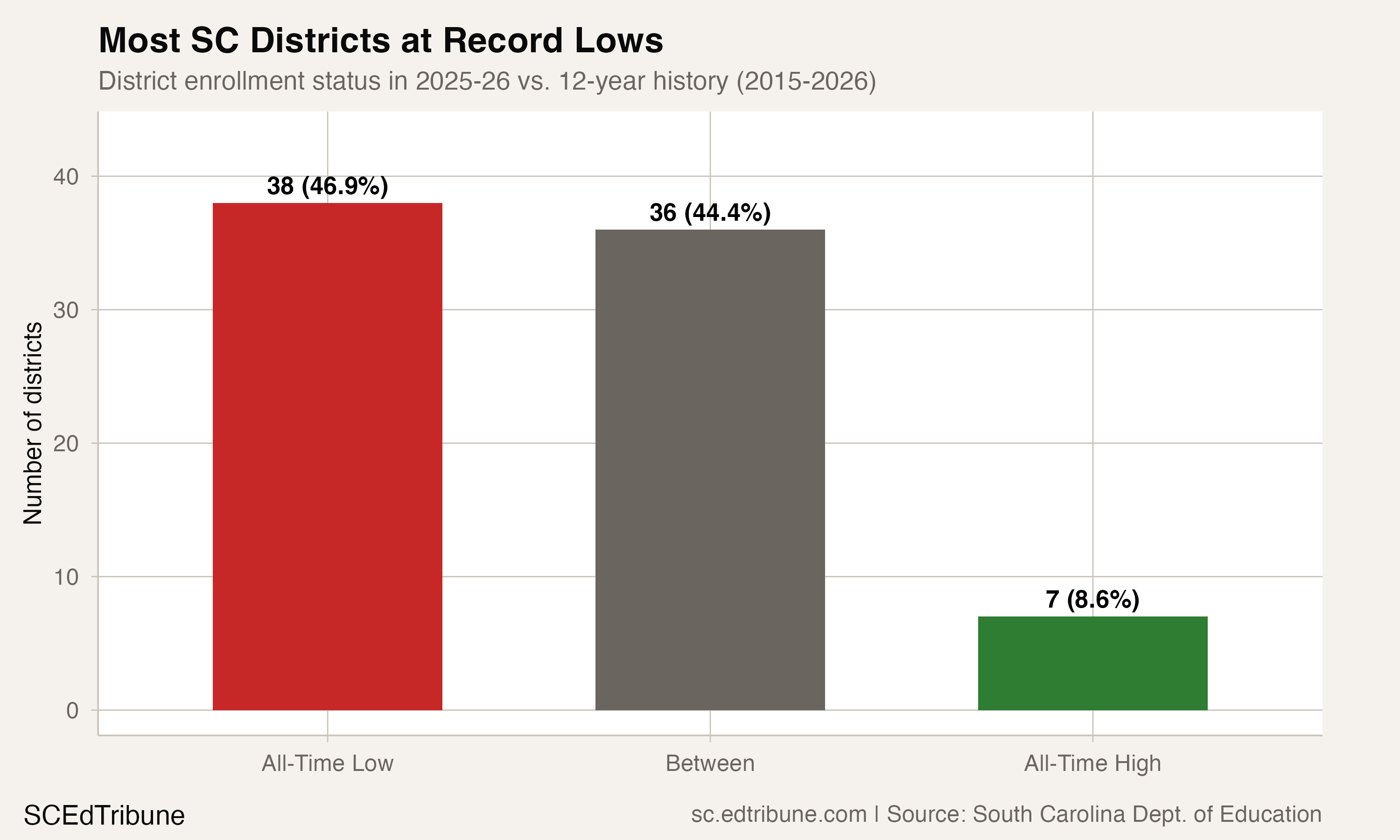
34 of South Carolina's 81 school districts recorded their lowest enrollment in 12 years in 2025-26, while 59 declined and only 5 reached highs.
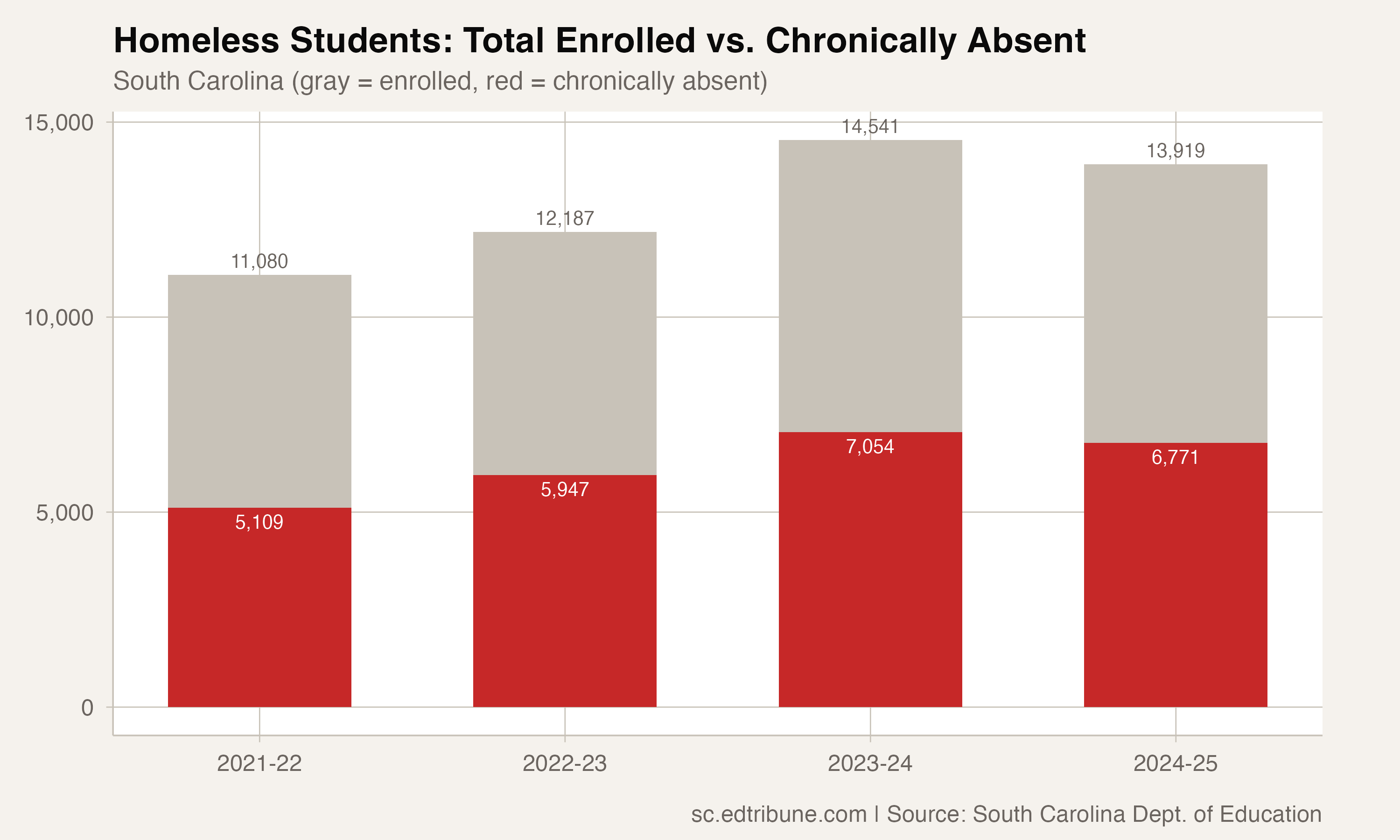
Students who are currently homeless in SC have a 48.7% chronic absenteeism rate that has barely budged in four years, while students in foster care are getting worse.
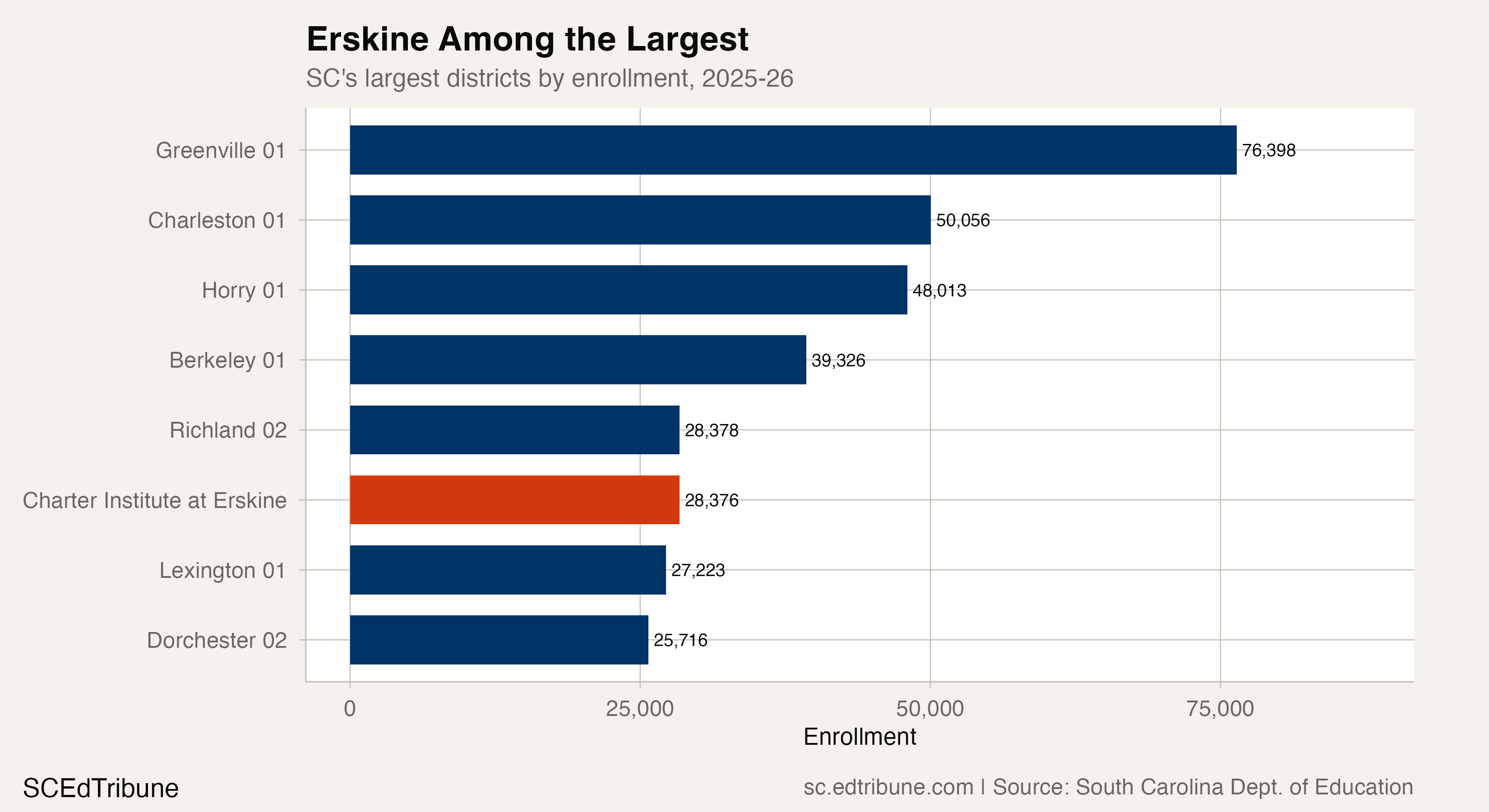
The Charter Institute at Erskine grew from 8,450 to 28,376 students in seven years, becoming SC's sixth-largest district.
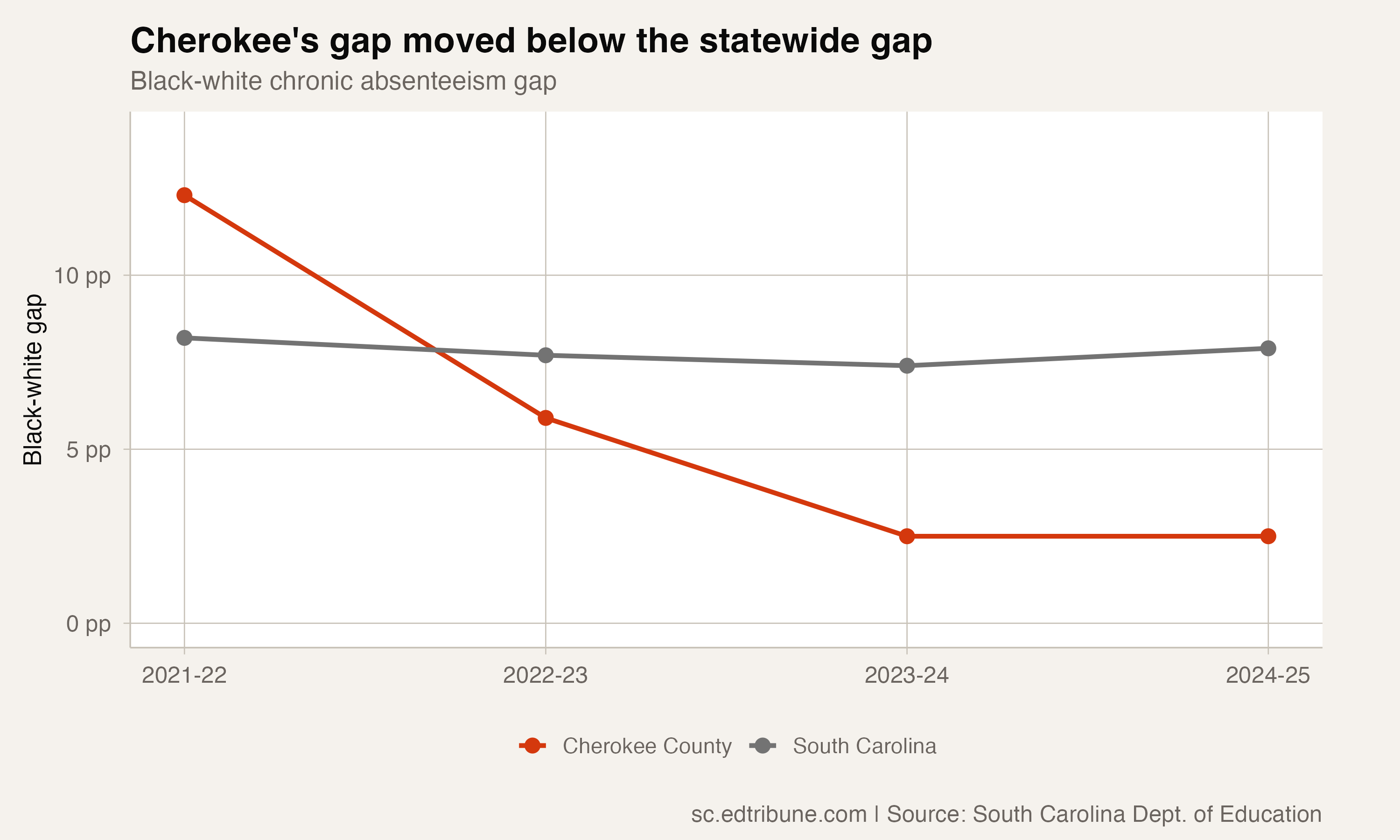
Cherokee County's Black-white chronic absenteeism gap went from 12.3 to 2.5 percentage points, the largest closure among SC districts averaging 5,000 to 10,000 students.
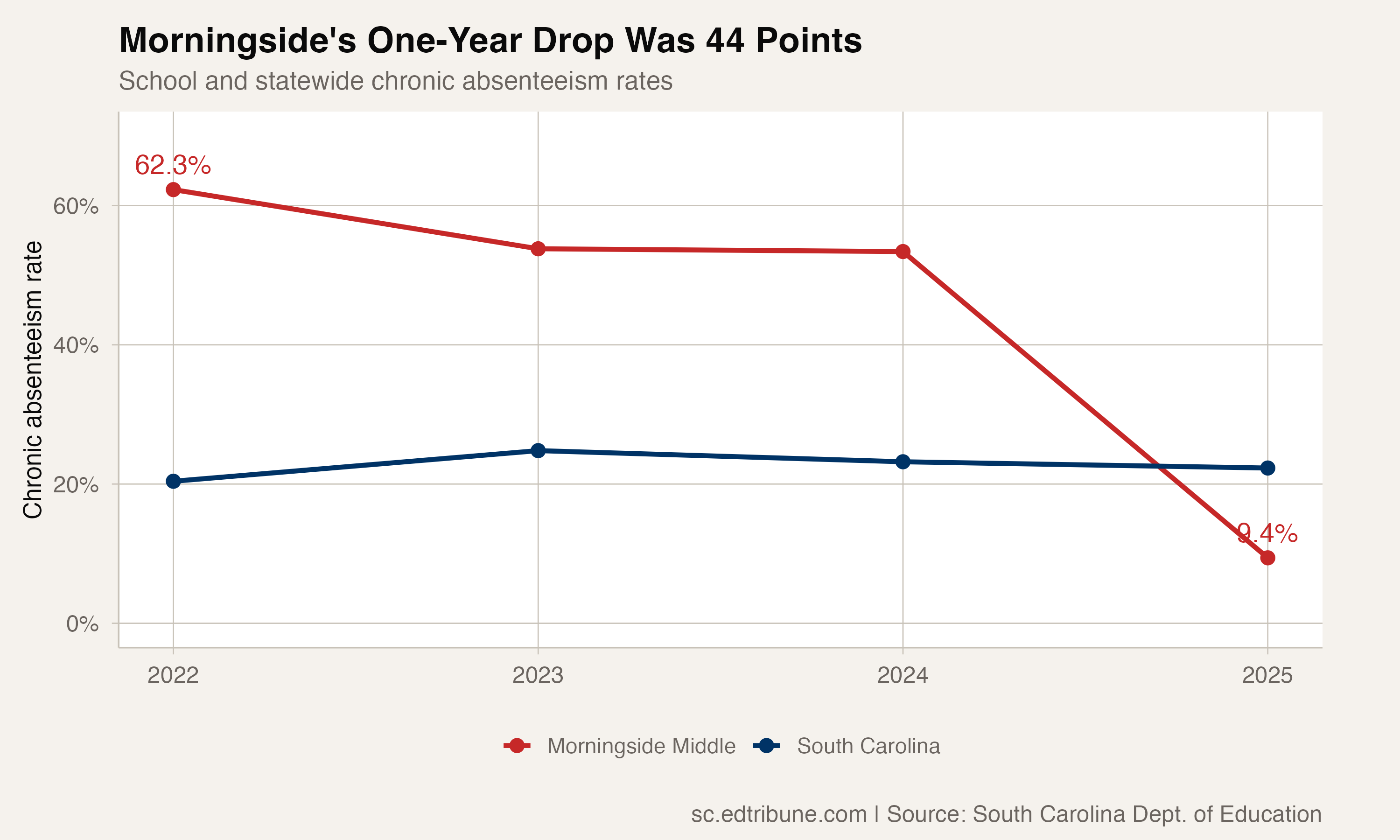
Morningside Middle, Baptist Hill Middle High and Beaufort Elementary posted the state's second-, third- and fourth-largest one-year declines in school chronic absenteeism. The data show the outcomes, not their cause.
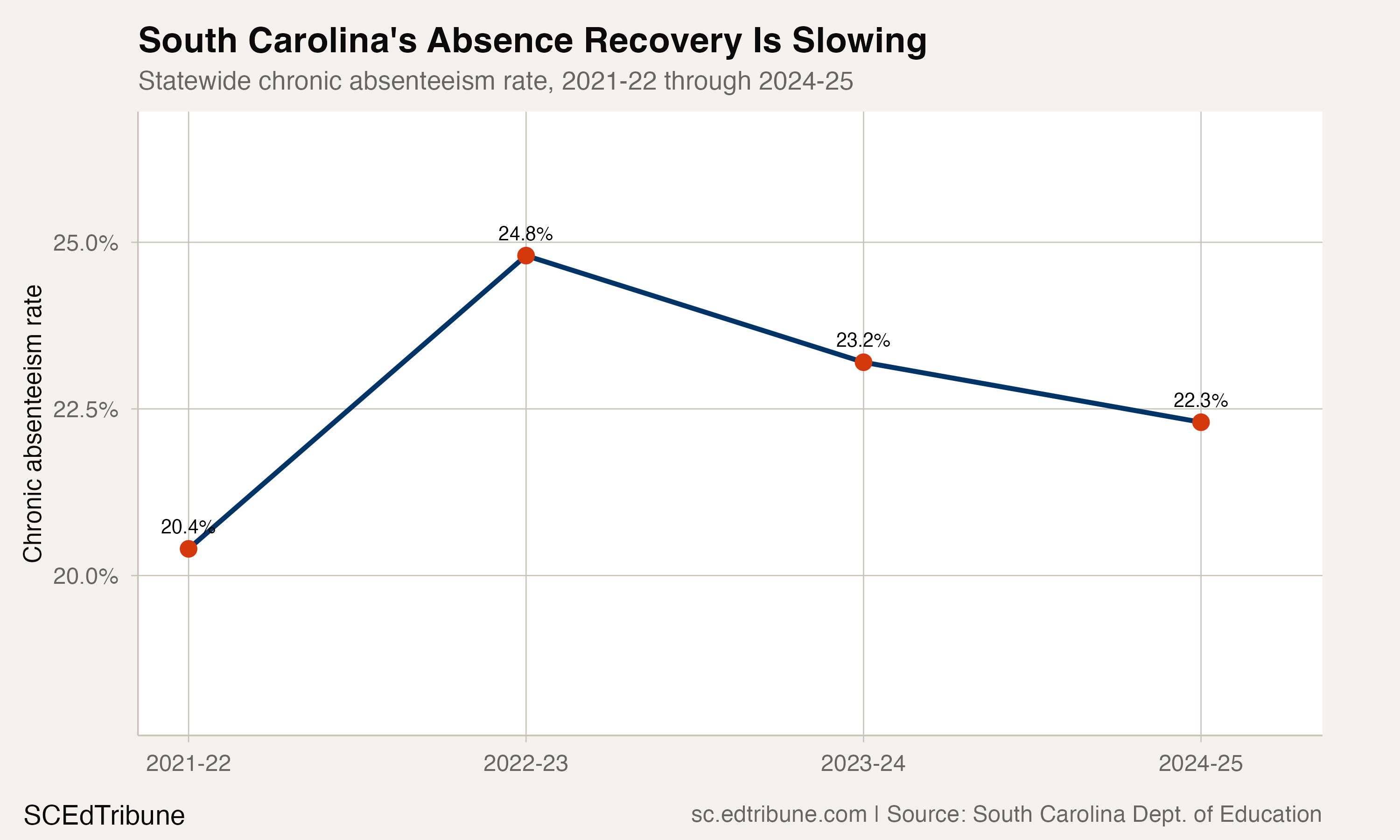
SC's recovery from its chronic absenteeism peak is decelerating. The state's Be Present S.C. campaign and Charleston's $25/week incentive pilot represent divergent bets on what works.
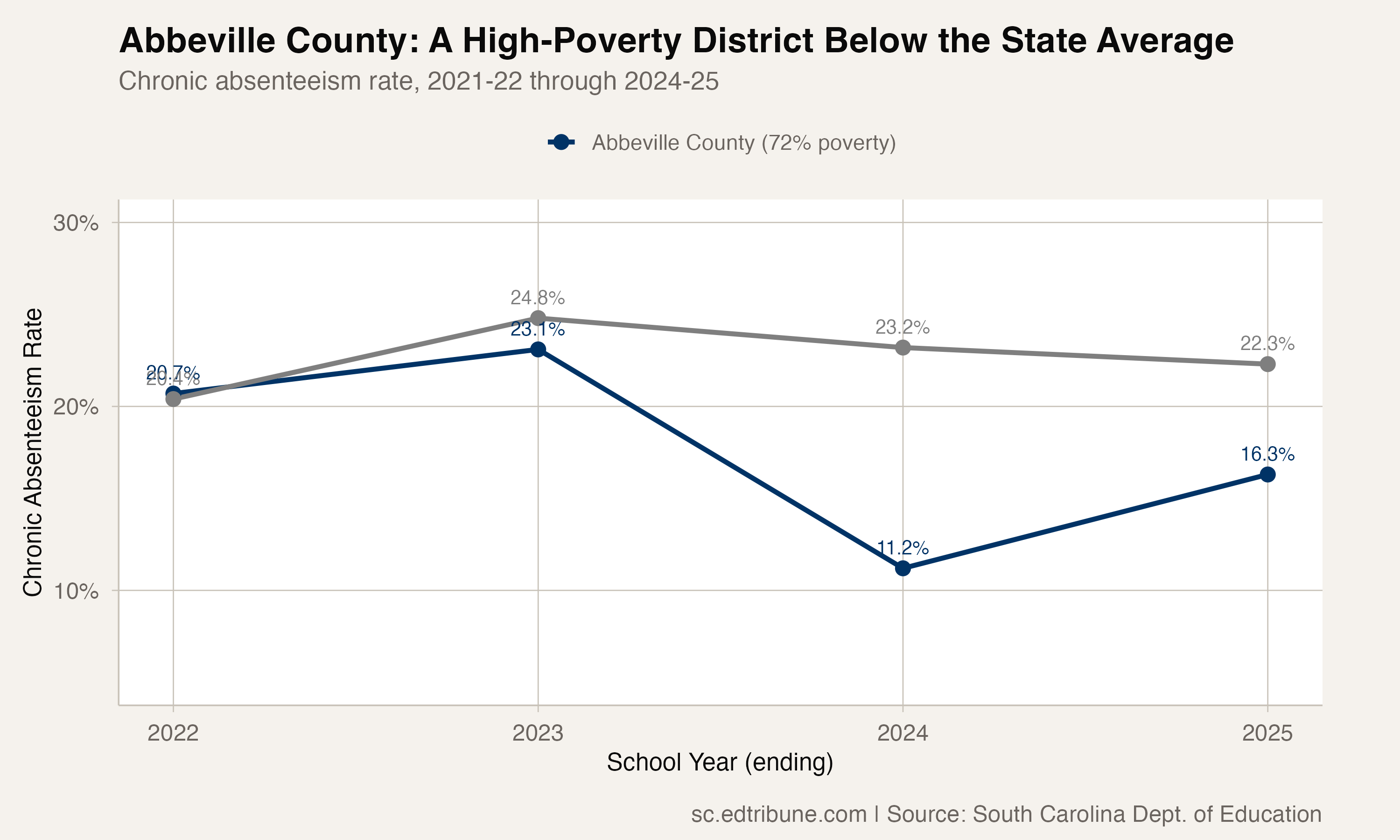
Abbeville County is 72% economically disadvantaged, yet its 16.3% chronic rate beats Dorchester Two, Richland Two, and most affluent SC districts.
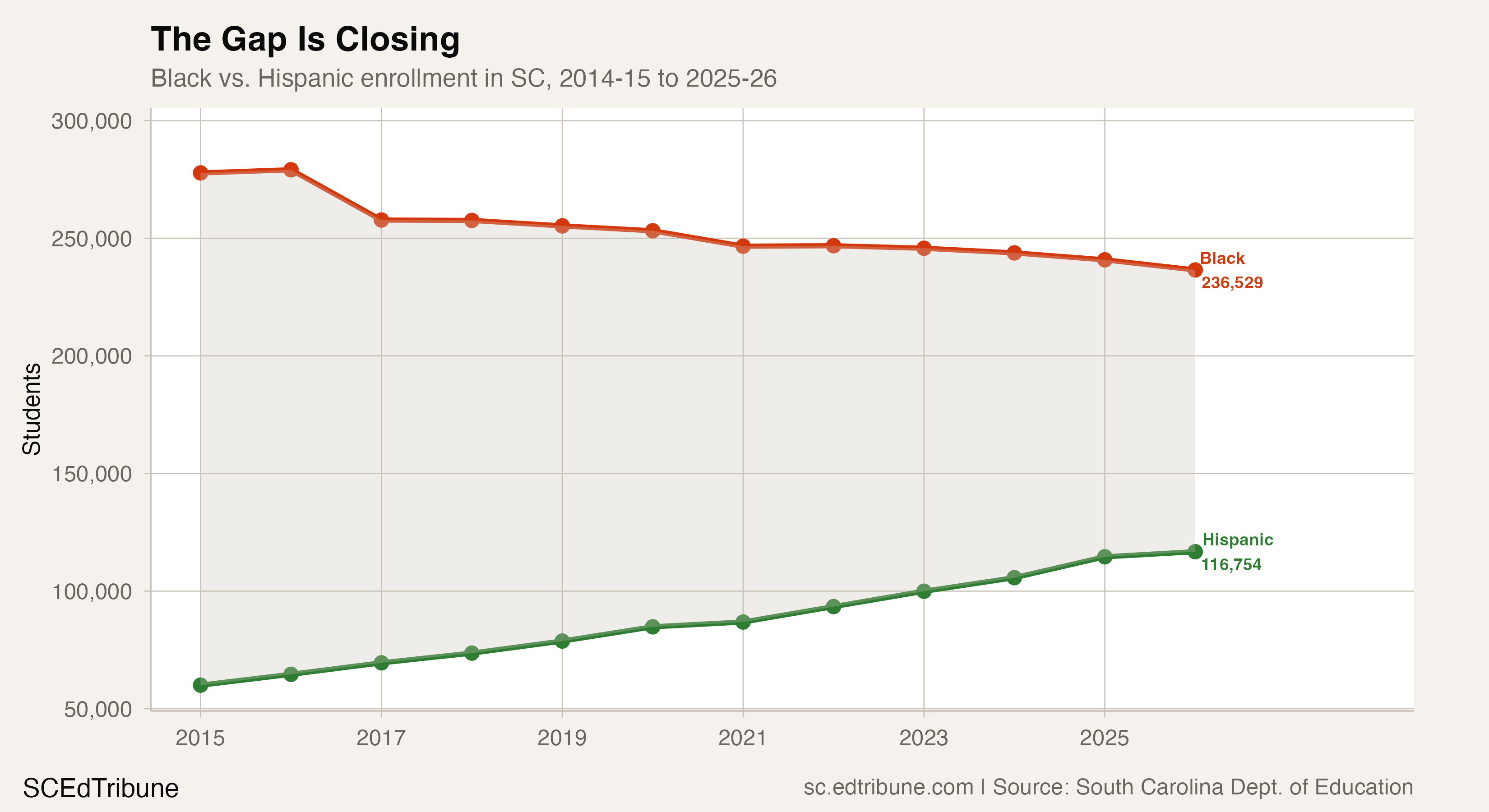
Hispanic enrollment in SC nearly doubled in 11 years, from 60,023 to 116,754. Without that growth, the state would have lost students.
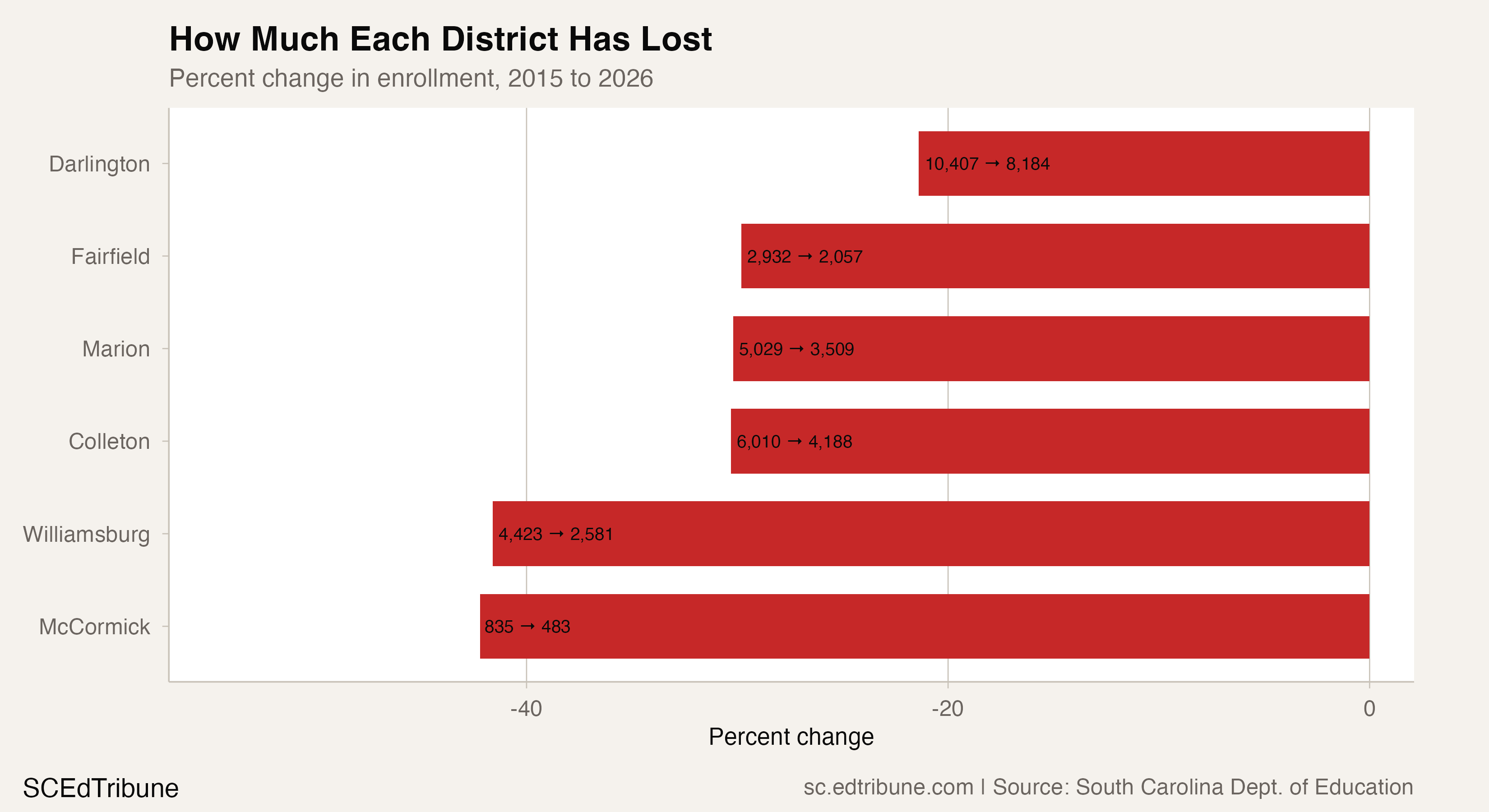
Colleton, Darlington, Fairfield, McCormick, Marion, and Williamsburg have lost a combined 8,634 students since 2015. All six are at all-time lows.
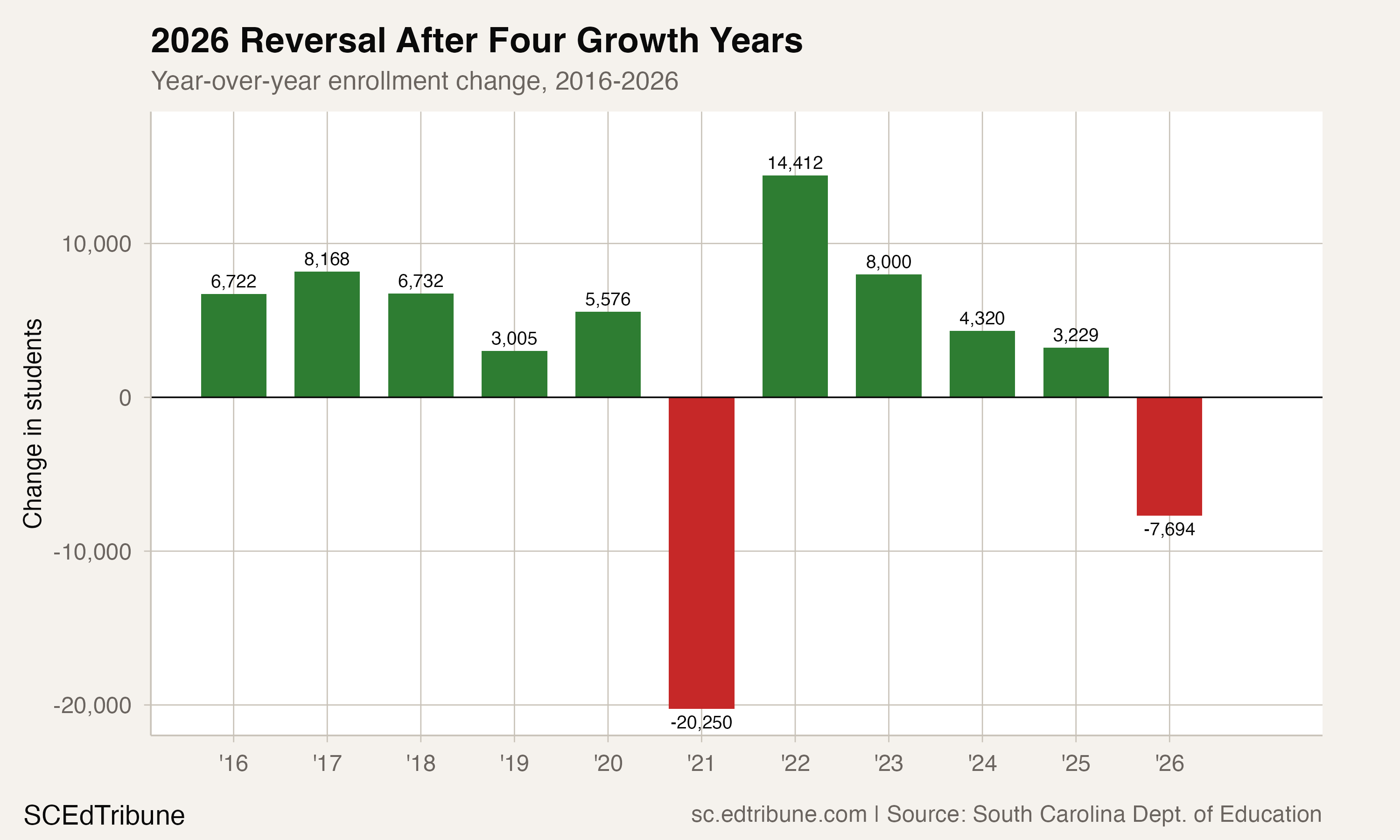
After fully recovering from COVID and reaching a peak of 796,780 students, South Carolina lost 7,694 in a single year. The 800,000 milestone will not be reached.
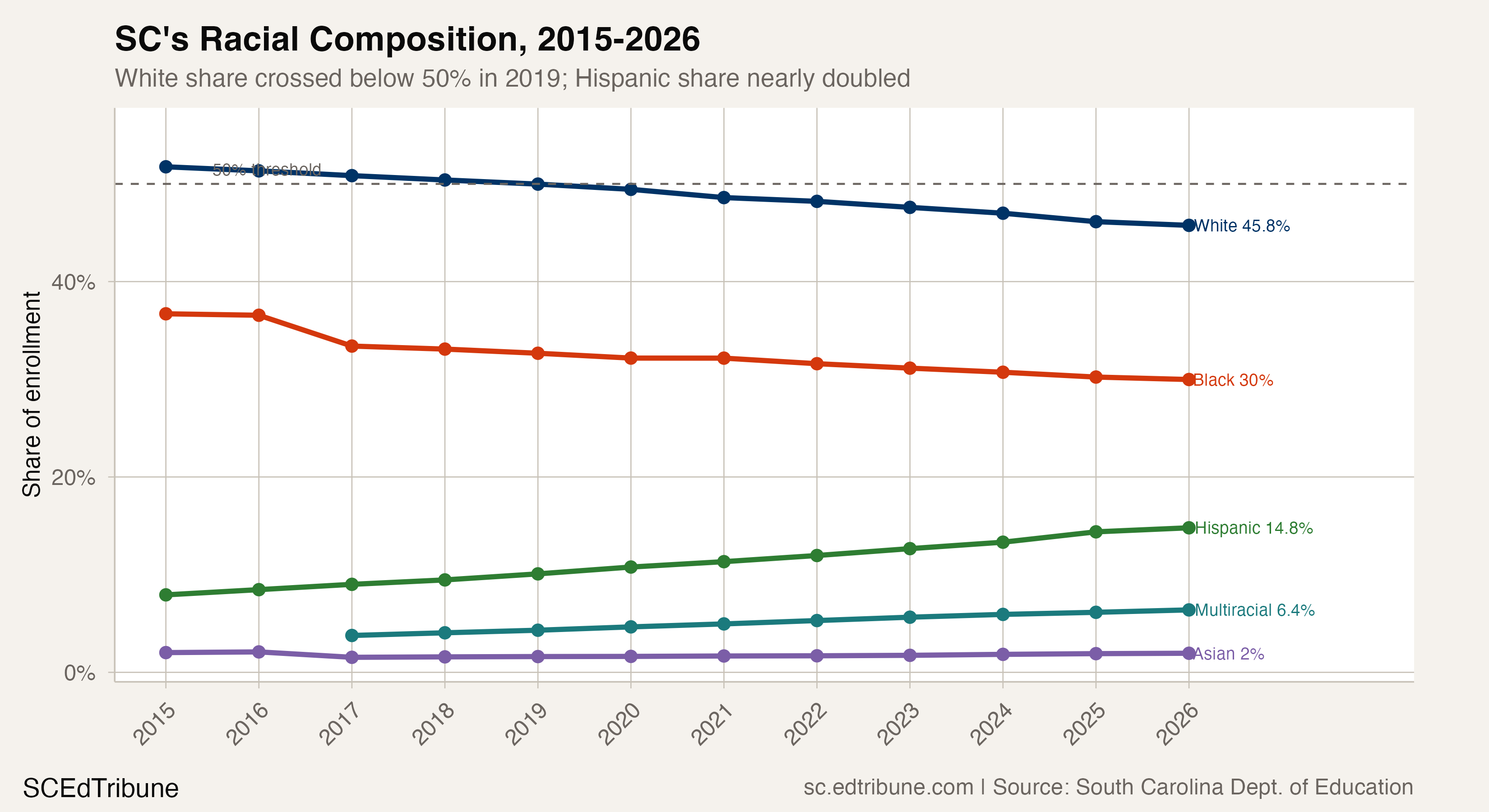
White students fell below half of South Carolina's public school enrollment in 2019-20, and the shift has sped up since, as Hispanic enrollment grew 67.8% from 2016-17 to 2025-26 and total enrollment rose.
SCDE releases 2025-26 enrollment data showing 789,086 students statewide, down 7,694 from a record high, the first non-COVID decline in a decade.